


Sage Grouse Species Profile
Stand on a sagebrush flat at first light in April and you'll hear a sound like water dripping into a barrel: the popping air sacs of male sage grouse strutting on a lek, a display that has played out on some of the same patches of ground for centuries. The greater sage-grouse is the largest grouse in North America, a true sagebrush specialist, and one of the most closely watched birds in the West. This species profile covers sage grouse identification (including the separate Gunnison sage-grouse), habitat, their unusual diet, lek breeding, hunting seasons and permits, what the meat is like, and the bird's history and conservation status.
Sage Grouse at a Glance
| Attribute | Details |
|---|---|
| Scientific name | Centrocercus urophasianus (greater sage-grouse); Centrocercus minimus (Gunnison sage-grouse) |
| Common names | Sage grouse, sage hen, sage chicken, "bomber" (large males) |
| Size | Males 26–30 in.; females 19–23 in. |
| Weight | Males about 4–7 lb; females about 2–3.5 lb |
| Lifespan in the wild | Typically 1–4 years; some hens live longer |
| Primary U.S. range | 11 western states, with the largest populations in WY, MT, NV, ID, OR, and UT |
| Typical season | Short fall seasons, mostly mid-to-late September, often by permit |
| Meat | Dark, rich; flavor varies with age and diet |
| Conservation status | Greater: not federally listed but long-term decline of roughly 80% since the mid-1960s. Gunnison: federally threatened since 2014; no hunting |
Sage Grouse Identification and Primary Attributes
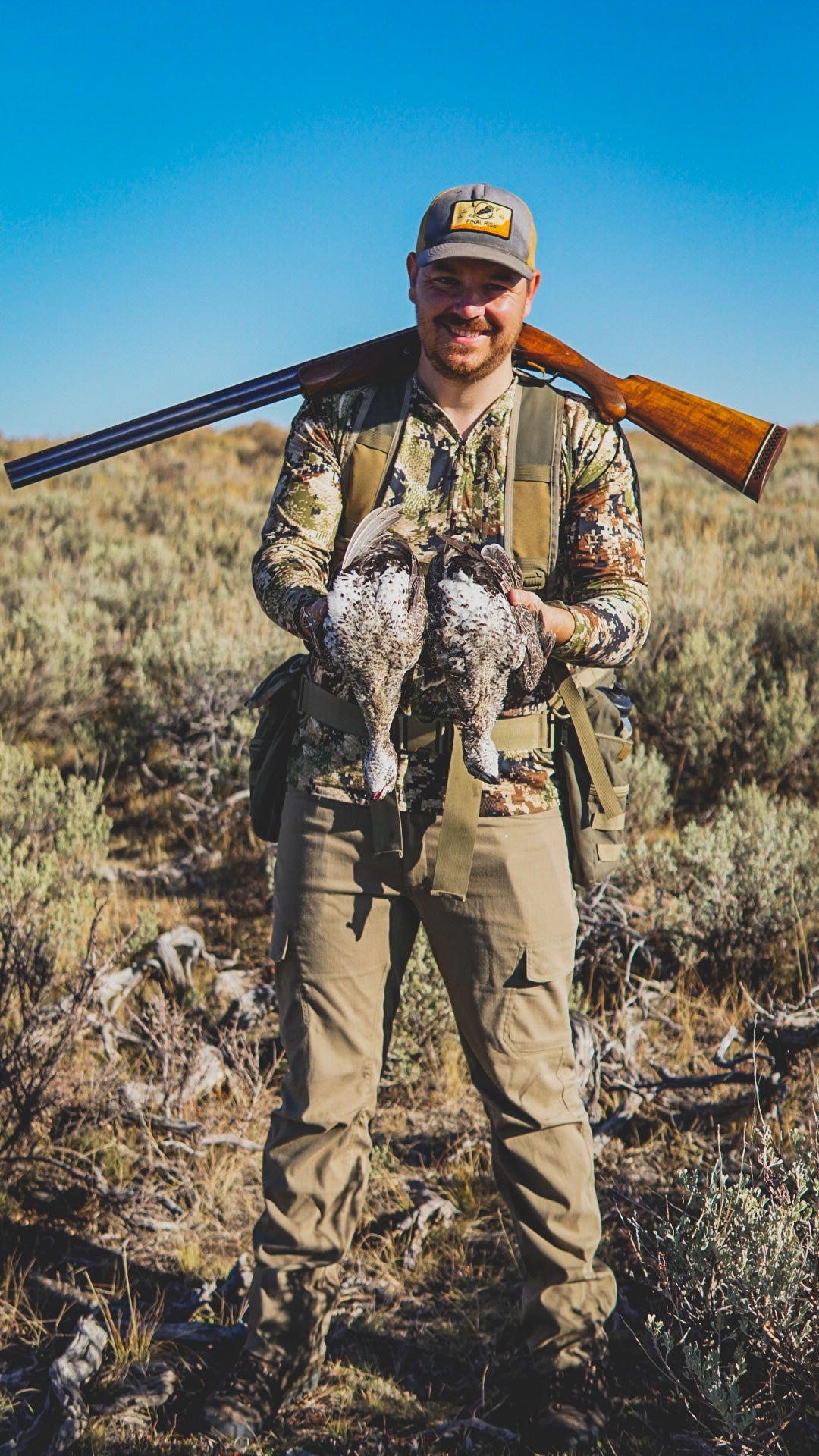
Sage grouse are big, heavy-bodied, long-tailed birds with mottled gray-brown backs and a black belly patch. Males are spectacular in spring: a white ruff of feathers around the breast, two bare, yellow-olive air sacs that inflate during display, yellow eye combs, a black throat, and a long, spiky tail fanned in a starburst. Hens are smaller and plainer, with mottled brown plumage, a black belly patch, and no white ruff.
Size is the easiest field clue. A mature male can weigh two to three times as much as a hen, and when a big bird lifts off the sage with a cackling kuk-kuk-kuk and slow, heavy wingbeats, there's little doubt what it is.
The Gunnison sage-grouse, recognized as a separate species in 2000, looks similar but is about one-third smaller, has distinct white barring on the tail feathers, and performs a different, faster display. It lives only in southwestern Colorado and southeastern Utah, does not overlap with greater sage-grouse, and is not hunted.
Sage Grouse Habitat: Where Sage Grouse Live
Sage grouse are sagebrush obligates: they cannot survive without large, connected expanses of sagebrush. Their seasonal habitat needs include:
- Leks on open areas with low vegetation and good visibility, such as ridgetops, flats, dry lakebeds, or old burns, surrounded by sagebrush.
- Nesting habitat in sagebrush with good grass and forb cover underneath to hide hens.
- Brood-rearing habitat that shifts from sagebrush uplands to wet meadows, springs, riparian areas, and irrigated fields as summer dries the uplands.
- Winter habitat of tall, dense sagebrush that pokes above the snow and provides both food and cover.
Big sagebrush and its subspecies, along with low sagebrush and black sagebrush, are the cornerstone plants. Wyoming holds the largest share of the remaining greater sage-grouse population, with significant numbers in Montana, Nevada, Idaho, Oregon, and Utah. Sage grouse also persist in Colorado, California, Washington, and small pockets in the Dakotas.
What Do Sage Grouse Eat? Diet and Water Needs
The sage grouse diet is unusual among game birds. Unlike most grouse, sage grouse lack a muscular gizzard capable of grinding hard seeds, so they rely on soft foods. Their diet breaks down like this:
- Winter: almost entirely sagebrush leaves, which are evergreen and available above the snow. Sage grouse are one of very few animals that can tolerate the chemical compounds in sagebrush in such large amounts.
- Spring and summer: sagebrush plus a variety of forbs such as dandelion, yarrow, clover, and phlox, and insects.
- Chicks: insects (especially beetles and ants) and forbs during their first weeks; chick survival depends heavily on good forb and insect availability.
Sage grouse get much of their water from succulent vegetation and dew, but in hot, dry summers, broods concentrate around wet meadows, springs, and stock ponds where green forbs and insects persist. Those mesic areas are among the most important (and most threatened) parts of sage grouse habitat.
Sage Grouse Breeding, Leks, and Brood Rearing
Sage grouse are lek breeders. From March through May, males gather on leks before dawn to strut: they fan their tails, puff their white ruffs, inflate and collapse their air sacs with a loud popping sound, and swish their wings against their stiff breast feathers. A small number of dominant males do most of the breeding. Biologists count males on leks each spring to track population trends, and some leks have been documented in use for decades.
After mating, hens may travel several miles to nest, usually under a sagebrush plant. Clutch size averages about 7–8 eggs, and incubation lasts roughly 25–27 days. Chicks leave the nest within a day and stay with the hen, who leads them toward wetter, greener areas as summer progresses. By fall, broods mix into flocks, and birds gradually shift to wintering areas, sometimes many miles away.
Sage grouse have a relatively low reproductive rate for a game bird, which makes populations slower to recover after declines.
Sage Grouse Hunting Season Dates and Permits
Sage grouse seasons are short and tightly regulated. Most states that allow hunting open in mid-to-late September for anywhere from a couple of days to a few weeks, with bag limits typically one or two birds per day and small season or possession limits. Many states use permits, tags, or draw systems, and hunting areas are often restricted to specific units with stronger populations. For example:
- Idaho sets seasons annually by zone based on spring lek counts and issues a limited number of tags.
- Colorado holds a short September season in limited units and, starting in 2025, requires a separate permit to hunt sage grouse.
- Wyoming, Montana, Nevada, Oregon, and Utah each set limited seasons based on lek data, and some areas are closed entirely.
Season dates and open areas can change year to year with population trends, so always check your state's current regulations and any required permits. Our complete sage grouse hunting guide explains how state draw systems work.
Sage Grouse Meat Profile: How Sage Grouse Taste and How to Cook Them
Sage grouse meat is dark and rich, and its reputation is mixed. Young birds and hens taken in early fall, when they've been eating forbs and insects, are mild and very good. Older birds, especially large males with a more sage-heavy diet, can take on a strong, sage-tinged flavor.
- Field-dress quickly. Drawing birds immediately and cooling them fast helps prevent strong flavors, especially in warm September weather.
- Favor young birds and hens. They're more tender and milder.
- Cook it like red meat. Sear breasts to medium-rare and slice thin against the grain.
- Marinate older birds. Buttermilk, wine, or citrus marinades soften strong flavors.
- Braise legs. They're tough and best slow-cooked or used for stock.
Sage Grouse Hunting History and Conservation Status
Lewis and Clark described sage grouse during their 1805–1806 expedition, and early settlers reported vast flocks across the sagebrush steppe. Sage grouse were heavily hunted for food in the 19th and early 20th centuries, and seasons have since become far more restricted. Over the past few decades, states have reduced bag limits, shortened seasons, and moved seasons later to reduce effects on hens.
Range-wide, greater sage-grouse populations have declined by roughly 80% since the mid-1960s, according to a U.S. Geological Survey analysis, driven mainly by habitat loss and fragmentation from wildfire, invasive cheatgrass, conifer encroachment, energy development, roads, and drought. In 2015, the U.S. Fish and Wildlife Service determined that listing the greater sage-grouse under the Endangered Species Act was not warranted, largely because of coordinated federal and state land-use plans. Those plans have been revised several times since; in late 2025 the Bureau of Land Management adopted amendments that gave states more management authority and opened more acres to energy development, and conservation groups filed suit in early 2026. Recent lek counts have continued to trend downward in several states; Idaho reported male lek attendance down 22% from 2025 to 2026, for example.
The Gunnison sage-grouse is listed as threatened under the Endangered Species Act (since 2014), with an estimated population of around 5,000 birds, and hunting for it ended after 1999.
For hunters, the best way to support sage grouse is to support sagebrush conservation: reporting harvest and providing wings when asked, following permit rules, and backing habitat programs that fight fire, cheatgrass, and fragmentation.
Gear for Sage Grouse Country
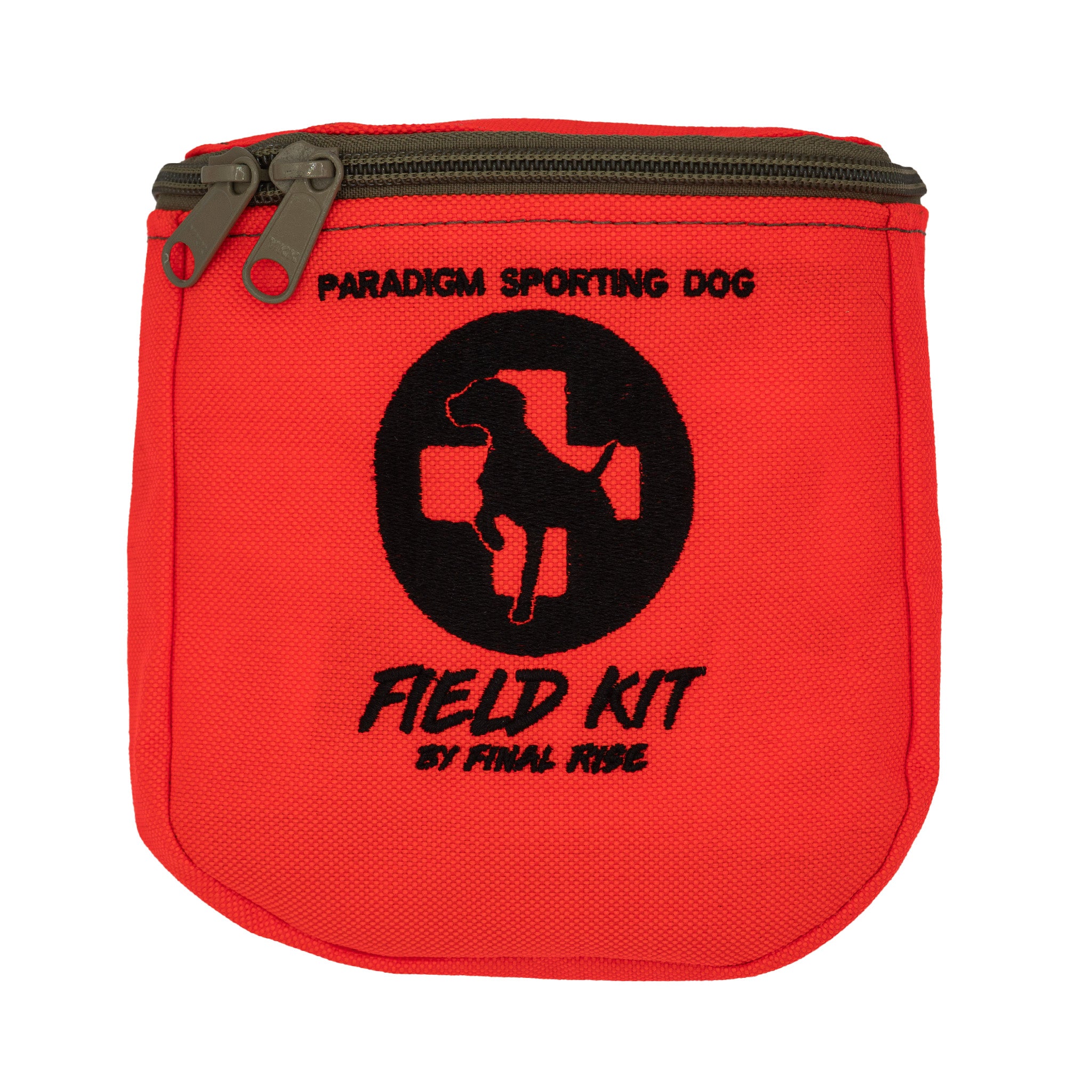
Sage grouse country is hot, wide open, and far from water, and early-season hunts can be brutal on dogs. The Summit Vest System carries enough water and safety margin for long days on the sagebrush sea, which is why it's our pick in What Is the Best Sage Grouse Hunting Vest?. Hunters planning bigger days or multiple dogs may prefer the Summit XT Vest System. A UPF-50 layer like the Bamboo Tech Hoodie helps in shadeless country, and a First Aid Field Kit is essential when you're miles from the truck. See our sage grouse gear checklist for the full list.
Frequently Asked Questions
How big is a sage grouse? Greater sage-grouse are the largest grouse in North America. Males typically weigh 4–7 lb and measure up to about 30 inches long, while hens weigh roughly 2–3.5 lb.
What do sage grouse eat in winter? In winter, sage grouse eat almost nothing but sagebrush leaves. They lack a muscular gizzard for grinding hard seeds, so soft, evergreen sagebrush leaves become their primary food when snow covers other plants.
Is sage grouse hunting legal? Yes, in several western states, though seasons are short, bag limits are small, and many states require special permits or limited tags. The Gunnison sage-grouse is federally threatened and cannot be hunted anywhere.
Is the greater sage-grouse endangered? The greater sage-grouse is not listed under the Endangered Species Act; federal officials found listing not warranted in 2015. However, its population has declined substantially over the past six decades, and it remains a major focus of conservation and land-management debate across the West.