
How to Hunt Dusky Grouse: The Complete Dusky Grouse Hunting Guide
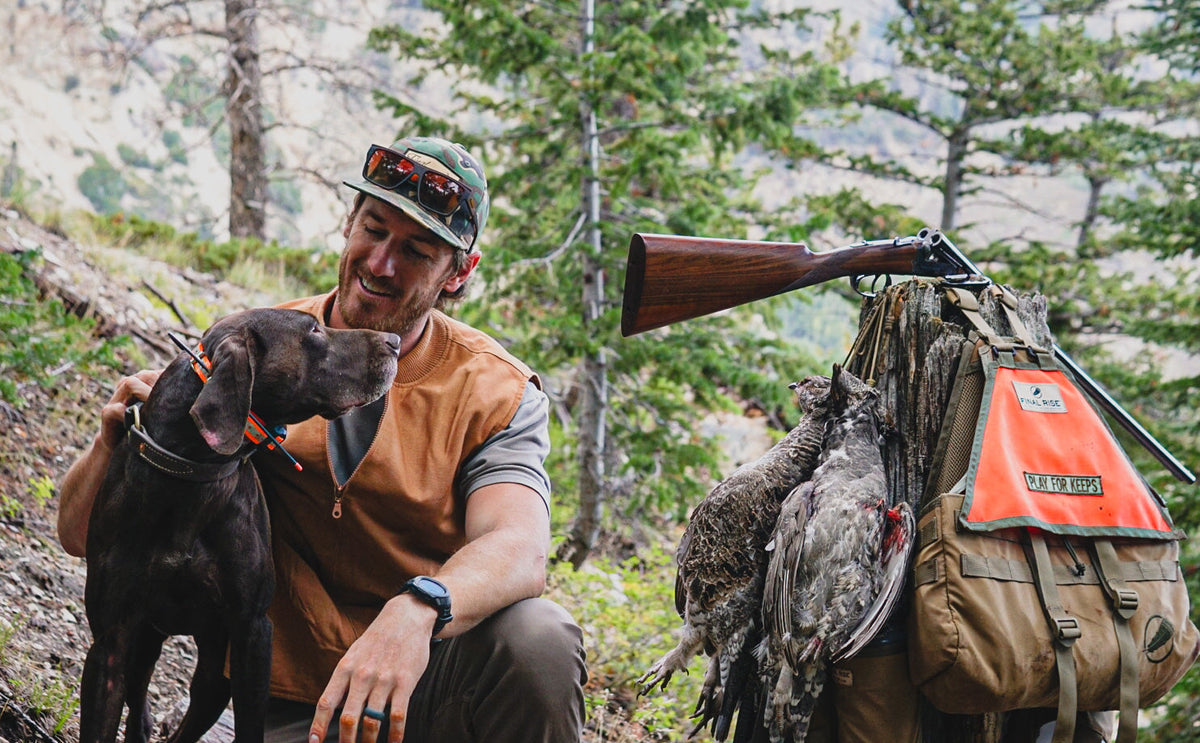
Dusky grouse hunting is a mountain sport before it's a bird hunt. You'll earn every flush by gaining elevation, working ridgelines between drainages, and reading terrain as much as cover, and the reward is a bird that can weigh close to three pounds coming up out of quiet timber close enough to feel the wingbeats. This guide covers everything you need to hunt dusky grouse with confidence: their history, where to find them, how their habits and habitat shift as the season progresses from foothill meadows into deep snow, how to shoot them, which dogs work best, what to do with them in the kitchen, and the gear worth carrying up the mountain.
The History and Origins of Dusky Grouse Hunting in America
For most of the 20th century, dusky grouse weren't even their own species on paper. Until 2006, ornithologists lumped dusky and sooty grouse together under a single name, blue grouse, before the American Ornithological Union formally split them based on differences in range, voice, and display behavior. Dusky grouse claim the drier, interior side of the western mountains (the Rockies and the ranges between them), while sooty grouse hold the moist, coastal side from the Pacific Northwest down through California. Hunters in the Rocky Mountain West have always known them as a distinct mountain bird regardless of what the field guides called them, and old-timers in Colorado, Idaho, and Montana still often call them blues out of habit.
Because dusky grouse live in remote, rugged, high-elevation country that never supported the kind of large-scale market hunting that hammered prairie species like sharptails and prairie chickens, they never went through the dramatic boom-and-bust history of those birds. Populations have stayed relatively stable for generations, with a global breeding population estimated around three million birds split roughly 56% in the United States and 44% in Canada. That stability, combined with terrain difficult enough to limit hunting pressure naturally, is why dusky grouse remain one of the more overlooked, lightly regulated upland pursuits in the West today.

How Popular Is Dusky Grouse Hunting Today?
Dusky grouse have a reputation problem, and it works in a hunter's favor. Older hunting literature calls them fool hens, birds so unbothered by human presence in remote high country that they'll sit on a branch and watch you walk underneath. That reputation is real often enough in late-season timber to be part of the draw, but it undersells a bird that can be genuinely wild and difficult to approach in open early-season meadows. Most dusky grouse hunters aren't chasing a trophy limit; they're mountain hunters, often elk or deer hunters who carry a shotgun or a .22 as a secondary tool and pick up a bird or two as a bonus during scouting trips or between stands.
Many hunters key in on dusky grouse well before the season opens, too. Males hoot from well-spaced territories through late winter and early spring, and that low, resonant call carries surprisingly far across a mountainside. Hunters who spend time in the high country during spring turkey season or early scouting trips often note which drainages and ridgelines are producing hoots, then come back to those same general areas once the fall season opens.
Core range runs through Colorado, Wyoming, Idaho, Montana, Utah, Oregon, and Washington, with additional populations across British Columbia, Alberta, and the Yukon. In much of that range, dusky grouse overlap with ruffed grouse in aspen and mixed-conifer forests, and hunters willing to cover ground on foot can realistically encounter both species in a single day. Because the terrain does most of the work limiting pressure, dusky grouse hunting has stayed a quieter, more self-guided pursuit than almost any other western upland bird. For hunters building a season around multiple mountain species, our guide on how to hunt ruffed grouse covers the aspen-country bird duskies most often share ground with.

Dusky Grouse Habitat: Where to Find Dusky Grouse
Dusky grouse cover more vertical terrain than almost any other upland bird in North America, and understanding how that changes through the year is the foundation of finding them:
- Breeding habitat (late winter into spring). Males establish well-spaced individual display territories, not communal leks, in mountain forests of fir, ponderosa pine, and aspen, where they hoot, strut, and flash a purplish neck sac to attract females.
- Nesting cover. Hens build simple ground nests in remarkably variable terrain, from shrubsteppe benches to alpine krummholz, generally with enough shrub or grass cover to conceal the nest.
- Brood-rearing range (summer). Hens lead broods into open grasslands, shrubsteppe, and mountain meadows rich in grasshoppers, beetles, and other insects chicks need to grow quickly.
- Early fall range. Birds can be found anywhere from low foothills up through alpine meadows, concentrating around recent burns, bunchgrass openings, and meadow edges where forbs and berries are available.
- Winter range. As snow builds, dusky grouse migrate upward into dense stands of subalpine fir and Douglas fir, where they shift to a diet that's almost entirely conifer needles and buds.
That last point is the single most important habitat fact for hunters: dusky grouse are altitudinal migrants, and where you find them in September is rarely where you'll find them in December.
Dusky Grouse Hunting Seasons: Timing and Regional Differences
Most western states open dusky grouse season in September, and because populations are considered stable and hunting pressure stays naturally low in such demanding terrain, seasons tend to run long and bag limits generous compared to prairie grouse, often stretching into November, December, or later depending on the state. Regulations do shift from state to state, so always confirm current dates and limits before you go, but the bigger variable that actually changes how you hunt dusky grouse isn't the state line, it's the calendar, because this bird migrates vertically as the season progresses.
Early Season Duskies: September Into October
Early in the season, dusky grouse are spread across a huge range of elevation, from low foothills all the way up into alpine meadows, which makes them genuinely hard to pin down on a map. Birds concentrate around open feeding areas, recent burns, bunchgrass fields, and alpine meadow edges, especially at first light, then often shift into shaded timber edges to escape midday heat. Early-season birds also tend to be warier and more willing to flush at real distance in that open country, so this is closer to classic upland hunting: covering ground, working meadow-to-timber transitions, and using elevation changes between opposing slopes to create productive edges.
Late Season Duskies: November Into Winter
As snow accumulates, dusky grouse retreat upward into dense pockets of subalpine fir and Douglas fir, where they feed almost exclusively on conifer needles and loaf in thick timber, often near decaying logs where new growth clusters. Birds also tend to gather in small groups on wind-blown, snow-scoured ridges where food and footing stay more accessible. Late-season duskies genuinely do hold tighter and flush more reluctantly than they did in September, particularly birds positioned downhill from a hunter, while birds above you on a slope are more likely to break and fly. That reputation for holding tight is real, but it doesn't make late-season hunting easy: the terrain is steeper, the snow slows you down, and the birds are concentrated in small, specific patches of timber rather than spread across open country, so finding the right pocket of trees matters more than raw mileage.

Shooting Dusky Grouse: Tips for Wingshooting Success
Dusky grouse shooting rewards patience and terrain awareness more than reflexes:
- Position yourself downhill when you can. Dusky grouse strongly favor flushing downslope, so approaching from below a suspected bird, along a drainage or below a meadow edge, gives you a much better shot opportunity than pushing in from above.
- Match your load to close timber work. Light loads of three-quarters to one ounce of low-velocity #6 or #7 shot handle dusky grouse cleanly without over-destroying the bird, and a skeet or improved cylinder choke covers the mix of close timber shots and slightly longer meadow-edge opportunities you'll see across a season.
- Take the extra beat in late season. Because late-season birds in dense timber often hold and flush more deliberately, especially when you're above them, there's usually time to find your feet, mount properly, and pick a single bird rather than snap-shooting.
- Glass before you push in. Dusky grouse often sit motionless on a bare branch, rock, or downed log rather than in cover you'd expect, and a quick scan with binoculars before you close the last fifty yards on a promising patch of timber can turn a possible miss into an easy, standing shot.
- Stay ready in open country. Early-season birds in meadows and burns can flush wild and at real distance, so treat those situations more like classic upland hunting: gun up, moving with purpose, ready for a bird that won't wait around.
- Follow the sign. Dust bath scrapes, droppings, and feathers around conifer clumps are reliable indicators of a loafing area worth working carefully, especially once birds have pushed up into winter timber.
Best Dog Breeds for Dusky Grouse Hunting
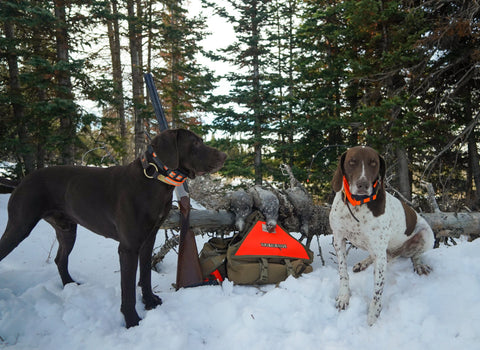
Steep, timbered mountain terrain calls for a different kind of dog than open prairie or desert hunting does. Big-running pointing breeds that excel in wide-open country can actually work against you here, since a dog ranging far ahead in dense timber is easy to lose track of and often pushes birds before you're anywhere close enough to capitalize on the point.
Close-working pointing breeds, Brittanys, Vizslas, and German shorthaired pointers handled to stay within sight and hearing, tend to outperform wide rangers, and well-trained flushing breeds like springer spaniels and Labs do well in this cover too, since their working style matches the tight, technical nature of timber hunting. Whatever breed you run, prioritize a dog that checks in often and works close, since mountain terrain, thin air at elevation, and long days make this more physically demanding on a dog than most upland hunting. Plenty of dusky grouse hunters, especially those pursuing them incidentally during big game season, hunt without a dog at all, working ridgelines and drainages by eye and relying on fresh sign to know when to slow down.
Dusky Grouse Tablefare: Cooking and Eating Your Harvest
Dusky grouse eat very differently than prairie birds like sharptails or sage grouse, and it shows on the plate. Rather than the dark, duck-like breast meat those grassland species carry, dusky grouse breast runs lighter and milder, closer to a good chicken than to waterfowl, which makes them an easy, approachable introduction to wild grouse for hunters used to farm-raised poultry.
As with most grouse, the breast cooks best quickly and isn't meant to be treated like a well-done chicken breast; a hot pan or grill, a short cook time, and a rest before slicing keep the meat tender rather than dry. Beyond a simple pan sear, dusky grouse breast holds up well to a breaded Milanese-style cutlet, a Dutch oven preparation with the legs and thighs, or any recipe built around a mild, tender white meat bird.

Essential Gear for a Dusky Grouse Hunt
Dusky grouse hunting is a study in elevation gain, so gear needs to earn its weight twice, once on the way up and again on the way down.
- A vest that scales with the season. The Summit Vest System carries enough capacity for layers, water, and harvested birds on longer late-season mountain days, while hunters chasing early-season birds across lower, warmer foothill country often prefer the lighter Sidekick Vest System, which keeps weight under two pounds for big vertical mileage.
- Real sun protection at elevation. UV exposure climbs fast as you gain elevation, and a UPF-50 layer like the Sonora Sun Hoodie earns its place on warm early-season ridge walks.
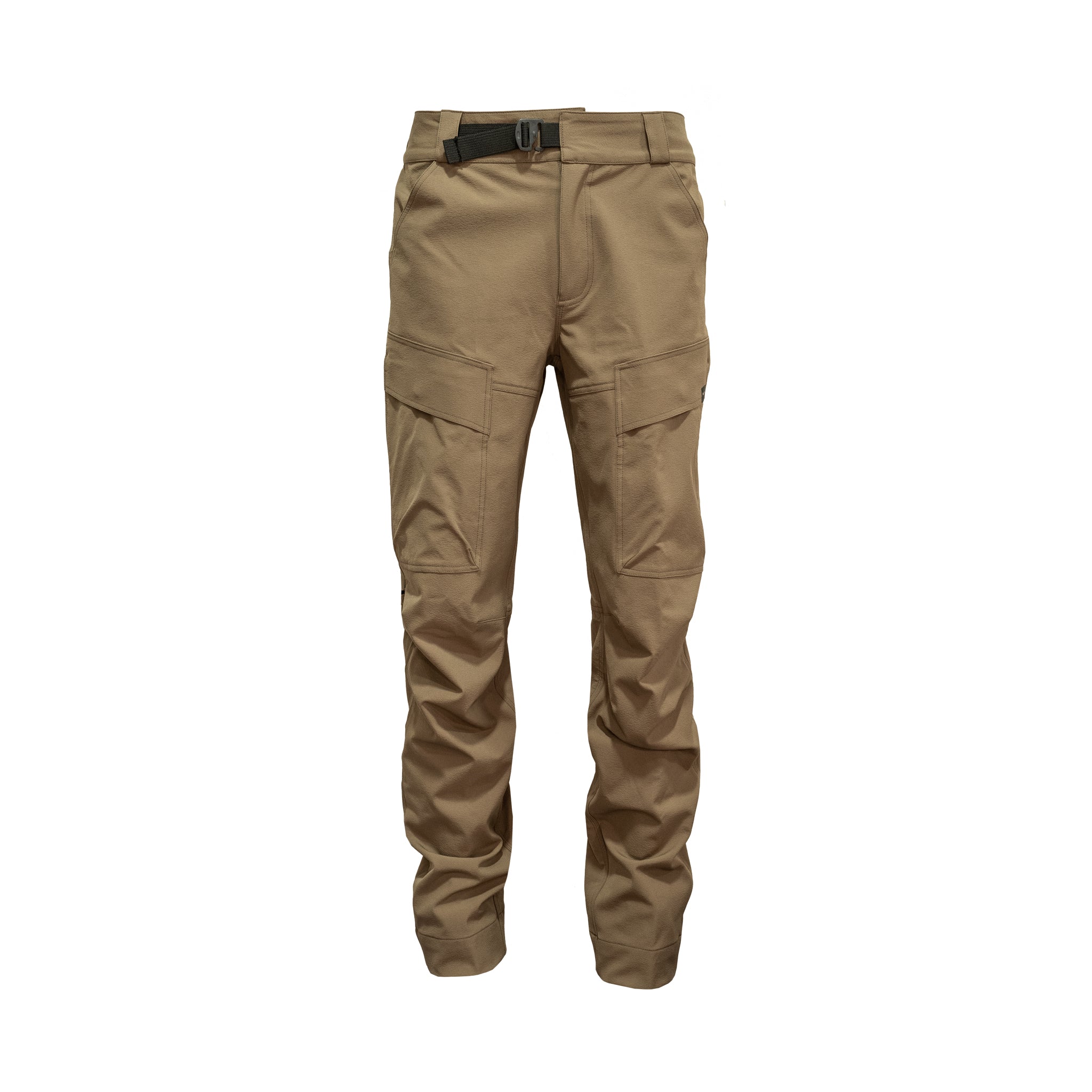
- Pants built for brush and steep footing. The All Terrain Field Pant pairs 4-way-stretch fabric and articulated knees with reinforced material that holds up against deadfall, brush, and the scrambling that comes with off-trail mountain terrain.
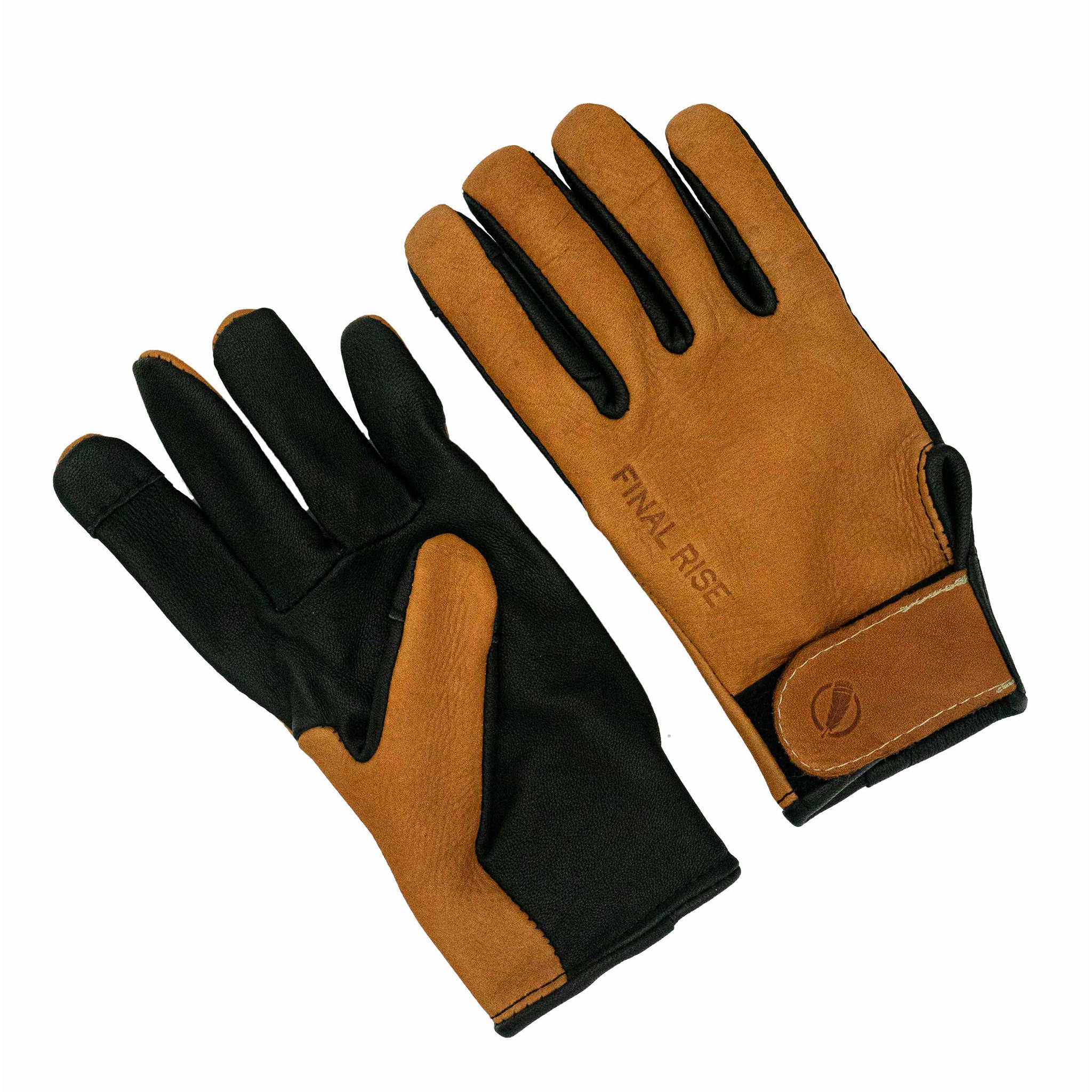
- Warm hands for snow and cold. Once you're working timber in November or December, a solid pair of Field Gloves or an Upland Hand Muff/Warmer makes a real difference working cold hands back into shooting shape.
- A dedicated GPS pouch for your dog's collar unit. Steep, timbered terrain swallows sightlines fast, and a purpose-built Alpha Handheld Pouch keeps a tracking unit secure and accessible rather than buried under layers.
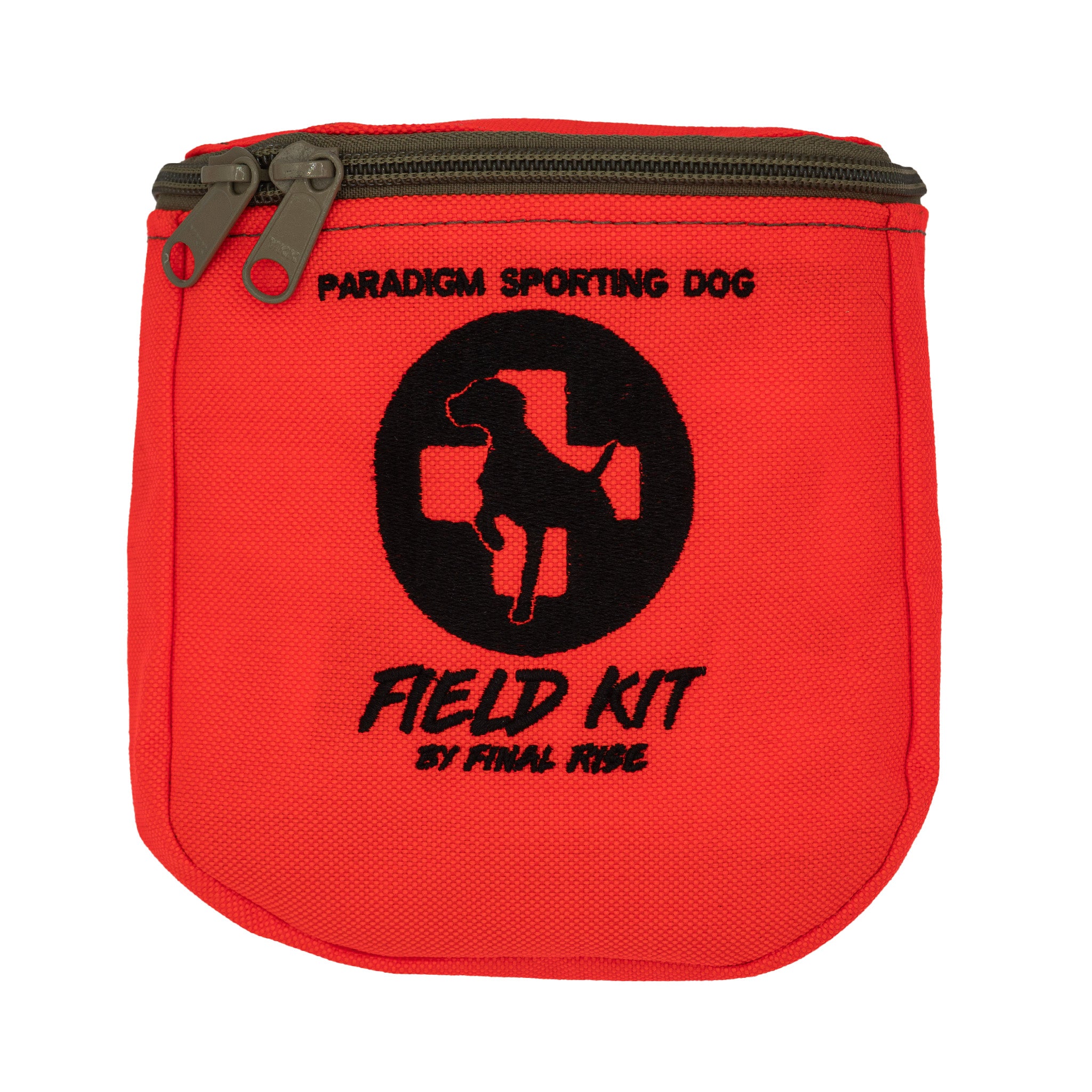
- A first aid kit built for remote country. Falls, cuts, and rolled ankles are real risks on steep, uneven mountain terrain far from the truck, and a dedicated First Aid Field Kit means you're prepared rather than improvising miles from help.
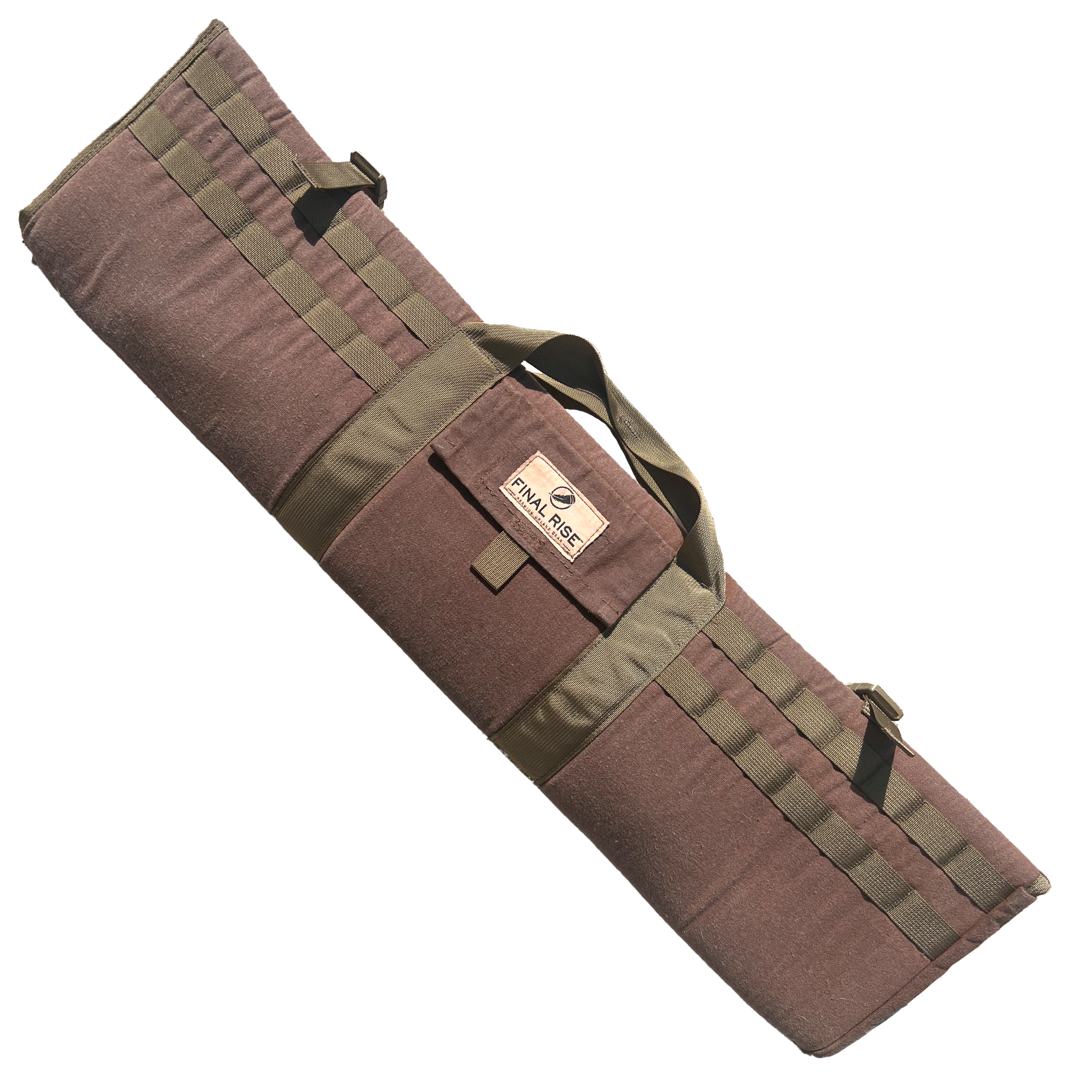
- A way to pack a shotgun safely on longer trips. Plenty of dusky grouse hunters are carrying a shotgun as a secondary tool during elk or deer season, and a padded Field Case protects it during the truck ride and camp time between hunts.
For a firsthand account of what a hard, snowy late-season hunt for this bird actually looks like, our late season blue grouse story is worth reading before your next trip up the mountain.
Frequently Asked Questions
Do I need to enter a lottery or draw to hunt dusky grouse? No. Unlike sage grouse, which require a permit, quota tag, or draw in nearly every state, dusky grouse are almost universally sold over the counter with no application process, reflecting their stable populations and naturally limited hunting pressure.
What's the difference between dusky grouse and blue grouse? They're the same bird by an older name. Until 2006, dusky and sooty grouse were both classified as a single species called blue grouse; many hunters in the Rockies still use that name out of habit even though the two are now recognized as separate species.
Are dusky grouse really that easy to approach? Sometimes, particularly in late-season timber where birds have had little human contact and can hold surprisingly tight, earning them the old nickname fool hens. Early-season birds in open meadows are a different story and can flush wild at real distance, so it pays not to get overconfident.
What elevation should I hunt at different points in the season? Start low to mid-elevation, foothills through mountain meadows, in September and October, then follow the birds upward into dense subalpine fir and Douglas fir stands as snow accumulates through November and December.