

Chukar Species Profile
Ask a chukar hunter about the bird and you'll usually hear about the terrain first: shale slides, basalt rimrock, and canyon walls that make your calves burn before the first covey ever calls. The chukar partridge is a bird of the steepest, driest country in the American West, and everything about it, from how it eats to how it escapes, is built for that ground. This profile covers how to identify chukar, where they live, what chukar eat and how they find water, how they breed and raise chicks, when seasons generally run, how chukar taste on the table, and how a bird from the Himalayan foothills became one of the West's signature game birds.
Chukar Partridge at a Glance
| Attribute | Details |
|---|---|
| Scientific name | Alectoris chukar |
| Native range | Southeastern Europe through the Middle East to the Himalayas and northern China |
| Size | 13–15 in. long |
| Weight | About 1–1.5 lb; males larger than females |
| Lifespan in the wild | Typically 1–3 years |
| Primary U.S. range | Great Basin and Columbia Plateau: NV, ID, OR, WA, UT, plus parts of CA, WY, CO, MT |
| Typical season | Late September or October through January (some states into February) |
| Meat | Light, mild, fine-grained |
| Conservation status | Not of concern; populations swing widely with weather and cheatgrass production |
Chukar Identification and Primary Attributes
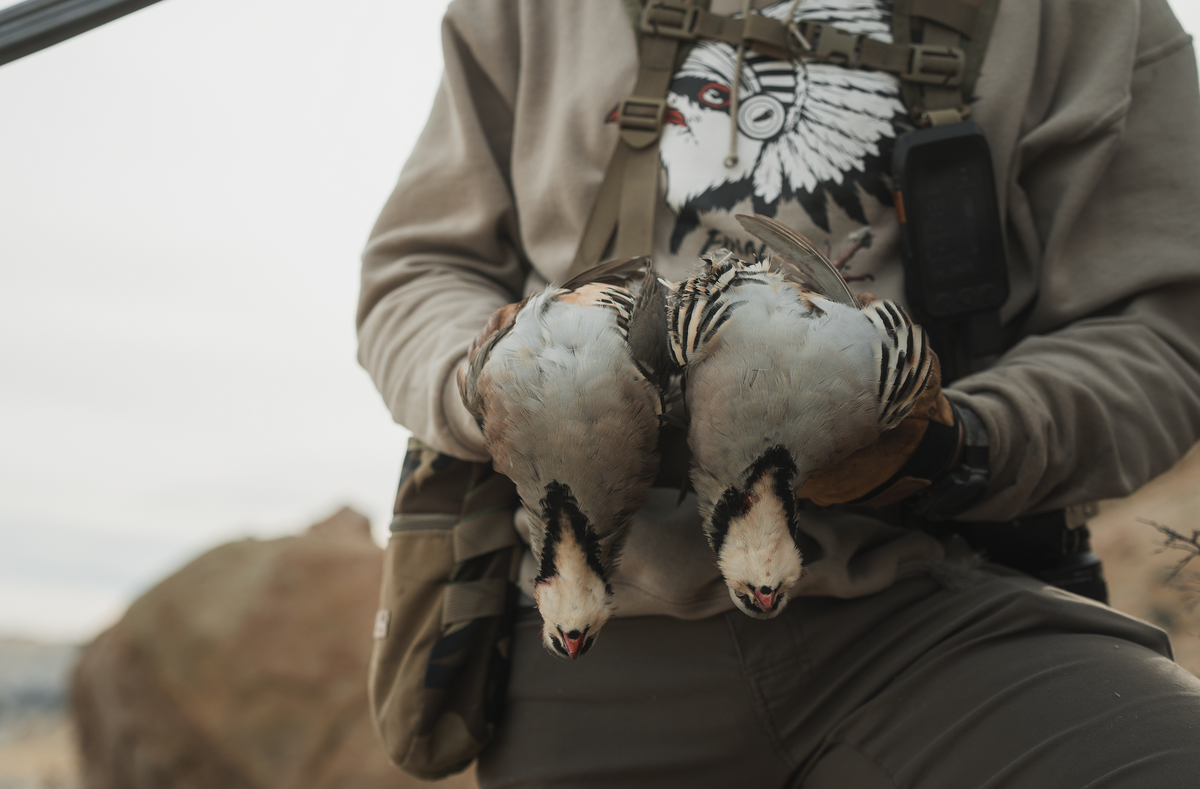
Chukar are handsome, compact partridges: soft gray-brown backs, buff bellies, and boldly barred flanks with black-and-chestnut stripes. A black band runs across the forehead, through the eye, and down to form a necklace around a creamy white throat. The bill and legs are coral red. Males and females look nearly identical; males are slightly larger and usually carry a small knob-like spur on the leg.
The name comes from their call: a loud, rhythmic chuk-chuk-chukar that echoes off canyon walls, especially in the morning and evening. Hunters use that calling to locate coveys, and a covey that's split up after a flush will often call to regroup.
Chukar are famous for their escape strategy. Pressured birds run uphill, often faster than a dog or hunter can follow, then flush downhill and sail across a draw to the opposite slope. That habit is why hunters try to get above birds and why the chukar earned its "devil bird" nickname. Fall coveys typically number 10–40 birds and sometimes combine into larger groups in winter.
Chukar Habitat: Where Chukar Live
Chukar thrive in arid and semi-arid steep country, generally between about 2,000 and 8,000 feet in elevation depending on the range. The classic chukar slope combines:
- Rock. Talus slides, rimrock, and boulder fields for escape cover, roosting, and shelter from raptors.
- Steepness. Canyon walls and broken hillsides; chukar seldom stray far from steep escape terrain.
- Cheatgrass and bunchgrass. Introduced annual grasses like cheatgrass, mixed with native bunchgrasses and sagebrush, provide most of their food.
- Water within reach. Springs, seeps, creeks, reservoirs, and man-made guzzlers, especially during hot, dry months.
Some of the best chukar country in the U.S. lies along the Snake, Salmon, and Owyhee river drainages in Idaho and Oregon, through the mountain ranges of northern and central Nevada, along Washington's Snake and Columbia breaks, and in Utah's western deserts. In winter, chukar shift to south-facing slopes, where snow melts first and food stays exposed.
What Do Chukar Eat? Diet and Water Needs
The adult chukar diet is overwhelmingly vegetable. Cheatgrass is the single most important food across much of the U.S. range: chukar eat its seeds in summer and fall and graze its fresh green shoots after fall rains and through winter. They also eat the seeds and leaves of bunchgrasses, Russian thistle, fiddleneck, filaree, mustards, and other forbs. Insects are a minor part of the adult diet but a crucial one for chicks during their first weeks.
Water is the chukar's seasonal limiting factor. In late summer and early fall, when temperatures climb and vegetation dries out, chukar visit water daily and concentrate within a short distance of reliable sources. That's why springs, seeps, stock tanks, and the wildlife guzzlers installed by state agencies and volunteer groups are so valuable in chukar country. Once fall rains green up the cheatgrass, birds get much of their moisture from succulent plants and dew and range more freely across the slopes.
That same heat and dryness hits dogs hard. Plan to carry far more water than you think you need early in the season; our guide to hydration for upland bird dogs explains why.
Chukar Breeding, Nesting, and Brood Rearing
Winter coveys break up and chukar pair off in late winter and early spring. Nests are shallow ground scrapes tucked under a sagebrush, a rock overhang, or a clump of grass, usually on a slope. Clutches are large, commonly 10–20 eggs with an average in the mid-teens, and incubation runs roughly 22–24 days.
Chicks are precocial and leave the nest soon after hatching. Both parents may stay with the brood, and family groups often merge into larger coveys by late summer. Biologists have also documented hens laying two clutches, with the male incubating one, though how common this is in North American populations is still debated.
Chukar populations boom and bust dramatically. A wet spring that grows abundant cheatgrass and insects can produce outstanding hatches; drought, cold spring rains, or harsh winters with deep, crusted snow can knock numbers down sharply in a single year.
Chukar Hunting Season Dates
Chukar seasons are generous compared to many upland birds. Typical patterns include:
- Idaho, Oregon, Washington, and Nevada generally open in late September or October and run through January.
- Utah typically opens in late September and runs into February.
- Colorado runs a shorter statewide season, September 1 through November 30.
- Bag limits are commonly 6–8 birds per day in the core Great Basin states, often in aggregate with Hungarian partridge, with lower limits in fringe states such as Colorado (4 per day).
Always confirm the current year's dates and limits with your state wildlife agency, as they can change with population surveys. For tactics that change across the season, see our complete chukar hunting guide.
Chukar Meat Profile: How Chukar Taste and How to Cook Them
Chukar is excellent table fare: light-colored, mild, and slightly richer than pheasant without being gamey. Their diet of seeds and greens gives the meat a clean flavor, and because they're small, a single bird makes a generous appetizer or a modest main course.
- Pluck if you can. The skin crisps nicely and keeps lean meat moist.
- Roast hot and fast. Whole birds do well in a 425–450°F oven for 20–25 minutes, or spatchcocked on a grill.
- Keep breasts slightly pink. Like most lean upland birds, chukar dry out if cooked all the way through.
- Use the legs. Chukar legs are small but flavorful; braise them with the carcasses into a stock or a pot of chukar and dumplings.
Grilled chukar with a lemon-herb marinade, chukar wrapped in prosciutto, and chukar enchiladas are all popular in Western camps.
Chukar Hunting History and Conservation Status
Chukar are native to a broad band from southeastern Europe and Turkey through Afghanistan, Pakistan (where it's the national bird), and into the Himalayas and western China. Introductions to the United States began in the late 1800s, but early releases largely failed. Success came in the 1930s through the 1950s, when state agencies released birds into the arid canyon country of the Great Basin and Columbia Plateau, ground that turned out to be strikingly similar to the bird's native range. Nevada, Idaho, Oregon, and Washington were opening hunting seasons by the late 1940s and 1950s.
The timing was fortunate in an unexpected way. Cheatgrass, an invasive annual grass that has damaged native sagebrush ecosystems across the West, became the chukar's most important food source. Today wild chukar are fully naturalized, sustain themselves without stocking, and support a passionate (and famously stubborn) community of public-land hunters.
Chukar are not a conservation concern as a species. Their numbers fluctuate widely from year to year, driven by spring precipitation, summer heat, and winter severity rather than harvest. Wildfire, cheatgrass die-off, and the long-term health of rangelands are the main management issues, along with keeping water developments functional in dry country.
Gear for Chukar Country
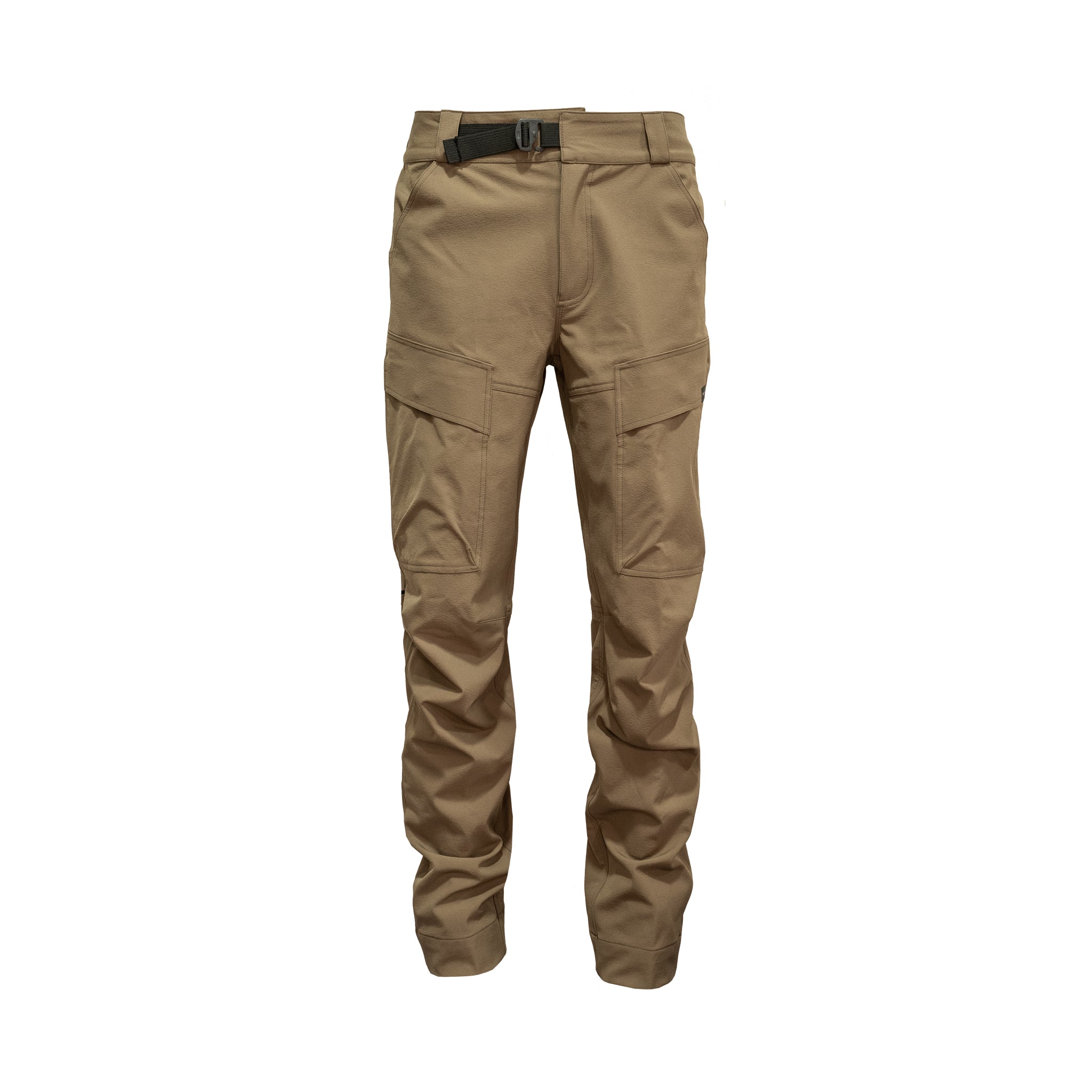
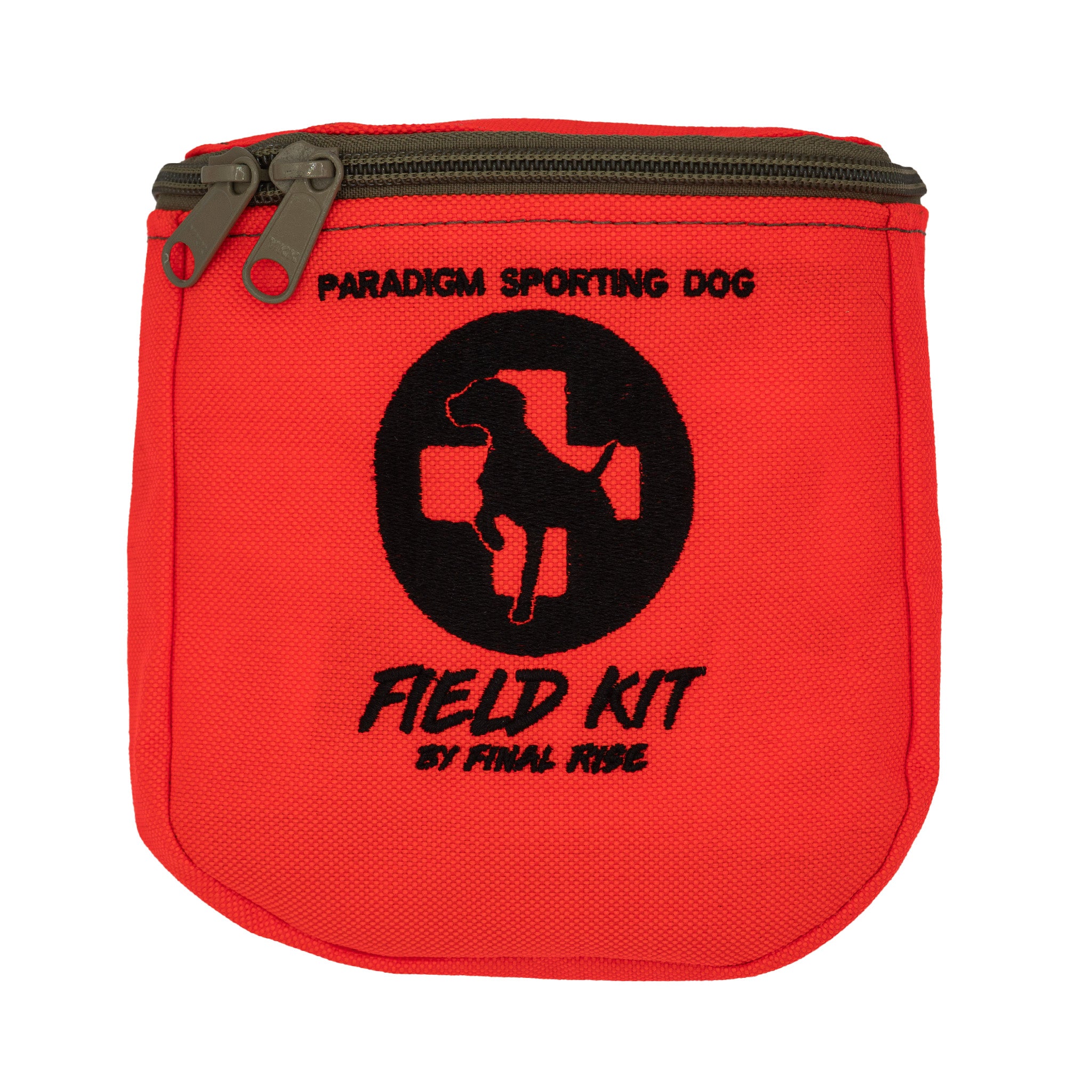
Chukar country punishes heavy, poorly balanced gear on the first climb. The Summit XT Vest System is our top chukar pick at 3.2 lb because it carries serious water for dogs, holds a game bag steady on a sidehill, and converts to an emergency dog carrier when you're miles from the truck. Hunters counting every ounce can drop to the Summit Vest System at 2.85 lb. Pair either with the All Terrain Field Pant for rock and scree, and keep a First Aid Field Kit handy for cut pads and torn dewclaws, which are common on basalt. We go deeper in What Is the Best Chukar Hunting Vest? and our chukar hunting gear checklist.
Frequently Asked Questions
Are chukar native to North America? No. Chukar partridge are native to Eurasia, from Turkey and the Middle East to the Himalayas. They were successfully established in the American West through state releases between the 1930s and 1950s and are now self-sustaining wild populations.
What's the difference between a chukar and a Hungarian partridge? Chukar are larger, with red bills and legs, a bold black necklace, and barred flanks, and they favor steep, rocky canyon country. Hungarian (gray) partridge are smaller, with a rusty-orange face, gray breast, and a dark horseshoe patch on the belly, and they prefer rolling farmland and grassland. The two often overlap on canyon edges near agricultural ground.
Do chukar need water every day? During hot, dry late-summer and early-fall weather, chukar generally visit water daily and stay fairly close to it. After fall rains green up the grasses, they get much of their moisture from vegetation and can range farther from open water.
Why do chukar run uphill? Running uphill is the chukar's primary predator-escape strategy. It puts birds above whatever is chasing them, and when they finally flush, they can fly downhill at high speed and glide across a canyon, putting huge distance between themselves and a hunter in seconds.