
Should You Carry a First Aid Kit for Your Upland Hunting Dog?
Every upland hunter has had the moment. Your dog comes back from a patch of heavy cover moving wrong, or holding a foot up, or squinting hard at one eye and there's a half-second where you run through what you're carrying and realize the answer is a bottle of water and a pocket knife.
The truck is two miles back. The nearest vet is forty minutes past that, and it's Saturday afternoon.
That gap between when something happens and when a professional can help is the reason you need to carry a first aid kit for your bird dog. You may not think it now, but that gap feels huge when your best buddy needs help.
You Are Farther From Help Than You Think
Upland hunting happens in exactly the places veterinary care isn't. Walk-in areas, crop fields, and public ground in the Dakotas, Montana, Idaho any most places in the west are hours from a clinic on a good day.
Put yourself out in the field mentally. It's a weekend, when most rural practices are closed. It's late in the afternoon. You're in a county with one veterinarian who may or may not answer the phone. Rural veterinary shortages are a real and worsening problem across the same states that hold the best bird numbers. And before any of that, you have to walk your dog back to the truck. Luckily, you're wearing your Summit XT vest, so you know you can rely on that to help with the hauling.
Realistically, the window between injury and professional care isn't twenty minutes. It's one to three hours. Everything that happens to your dog in that window happens with whatever you brought.

The Injuries Are Predictable
This isn't about freak accidents. Veterinarians who work with sporting dogs describe the same short list every season, and every item on it is a direct product of upland cover.
Lacerations. Barbed wire, sharp deadfall, and ice-crusted cattails open dogs up routinely. Like our good friend Dr. Clairissa Maples says "It's going to happen - it's just a matter of time." The most common injuries she sees in her practice are barbed wire lacerations, which are commonly found standing or worse, half buried in the ground. I myself have seen a low fence flay my Labrador's back clean open.
Eye injuries. Dogs in heavy cover take dirt, seeds, and grass awns to the eye constantly. An embedded seed under an eyelid can begin scratching toward a corneal ulcer within minutes. Flushing the eye in the field isn't a convenience, it's the difference between an irritation and a permanent injury.
Feet and legs. Cactus spines, split pads, and torn or broken toenails end more hunts than anything else. A torn nail bleeds impressively and hurts enough that a dog will refuse to walk on it.
Stings and allergic reactions. Wasp nests in old fence lines, ground hornets in September, or even a snake bite in the middle of the prairie. A swelling muzzle far from help is a scary thing to watch with nothing in your pack.
Heat, cold, and blood sugar. Hard-running dogs crash. Lean, high-drive dogs can burn through their blood sugar and start staggering. A wet dog on a December walk-out sheds heat fast.
None of these are once in a lifetime injuries. They are the ordinary hazards of the exact terrain we choose to hunt.

Your Dog Won't Tell You It's Hurt
Bird dogs are terrible at self-preservation, and that's largely why we love them. A dog locked into birds and running on adrenaline will hunt through a cut foot, a stinger, and a seed in the eye without slowing down enough for you to notice.
By the time the limp is obvious or the eye is swollen shut, the injury has usually been there a while. That's an argument for carrying supplies and for looking your dog over at every water break you can: checking feet, eyes, ears, and armpits before your dog decides to show you.

Dogs Are Heavier Than They Look
Carrying a dog flat out sucks. They don't do much to help and if they're injured, they may be a liability. If you don't have a vest capable of carrying out a dog like our Summit, you're probably stuck carrying them out with your arms. An injured dog doesn't bite out of anger, they bite out of fear and pain. You should never, EVER, put your face near an injured dog's face. It's an accident waiting to happen.
A bandage that turns a bleeding foot into a walkable foot isn't a minor convenience. It's the difference between a long walk and a genuine emergency. Not only do you need to be prepared to address the issue, you need to be prepared to load them up and get them out without making things worse.

Stabilize, Don't Treat
It's worth being clear about what field first aid actually is. You are not performing surgery in a wheat field. The goal is narrower and more achievable: control bleeding, protect a wound from contamination, flush what needs flushing, manage a systemic reaction, and get your dog to a veterinarian in better shape than they'd otherwise arrive.
That framing matters, because it means you don't need to be a vet to use a kit well. You need a muzzle so you can work on a dog in pain. You need something that stops bleeding. You need clean bandage layers. You need a way to flush an eye. You need to recognize a blood sugar crash. That's a learnable, finite skill set.

A Kit in the Truck Is a Kit You Don't Have
The most common mistake isn't skipping a first aid kit. It's owning a good one and leaving it in the truck.
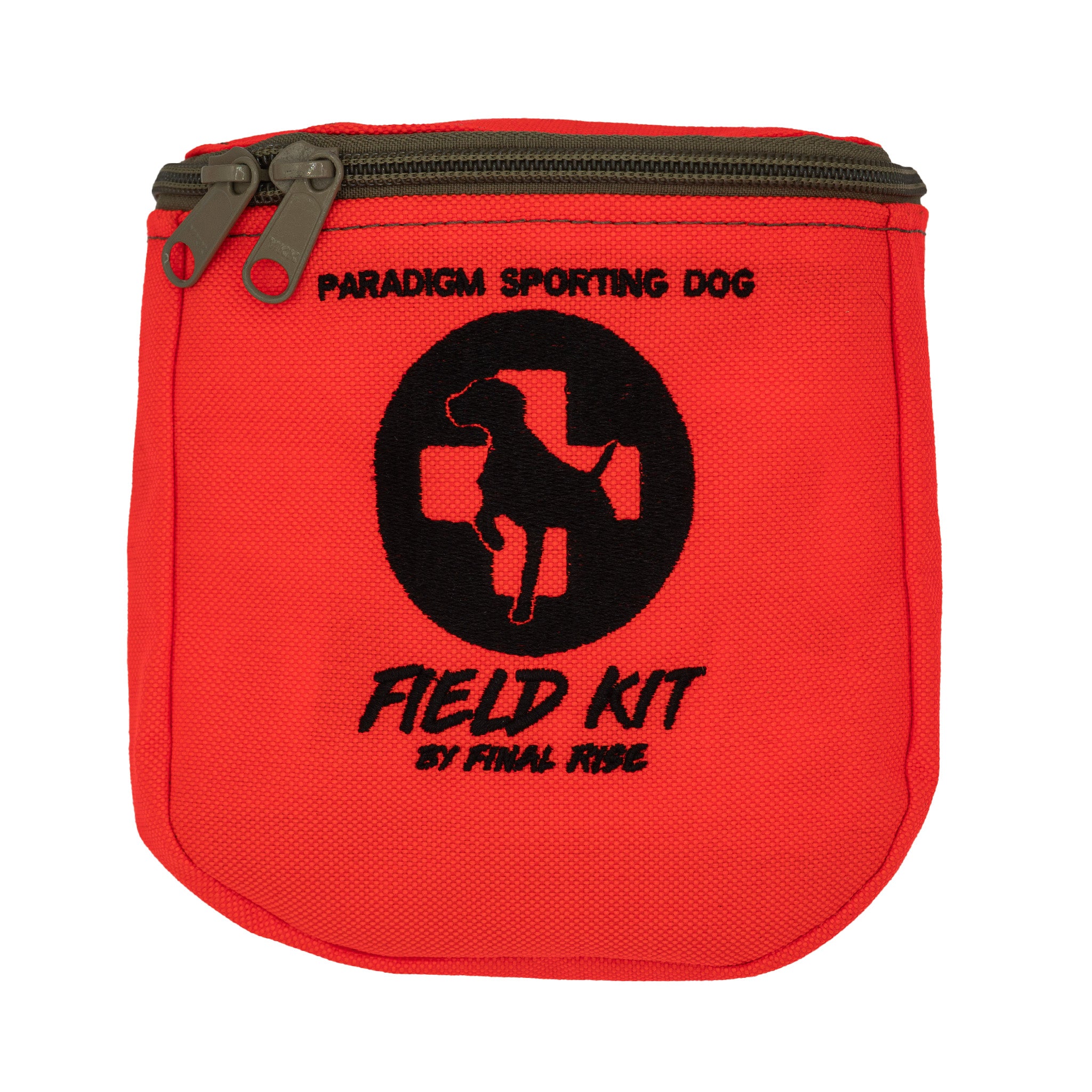
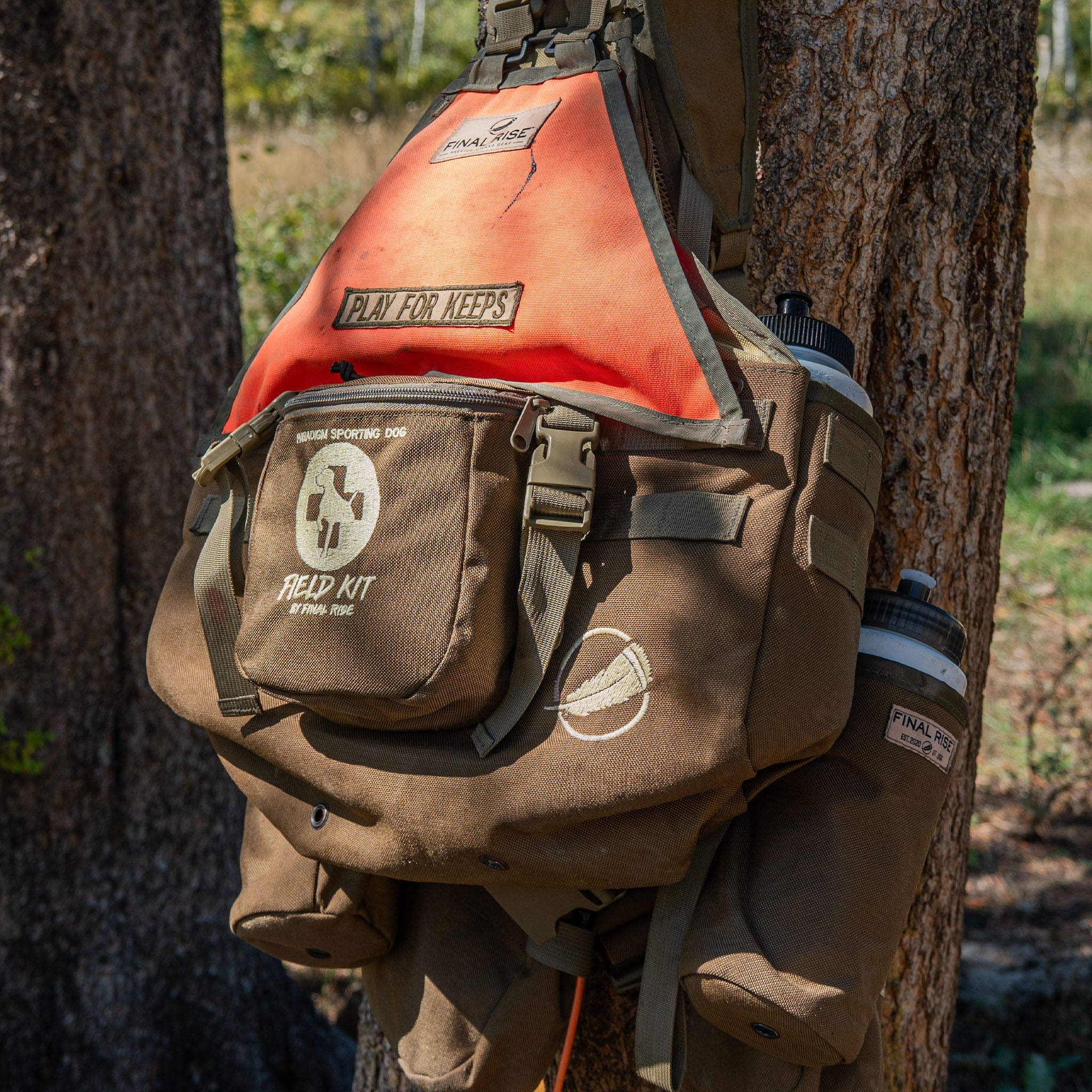
Almost every scenario above happens at distance — that's the whole problem. A kit does its job only if it's on your body when it's needed, which is why the Final Rise First Aid Field Kit is built into a 6" x 6" x 3" Cordura pouch that mounts directly to your vest or any MOLLE-compatible gear. It was developed with Paradigm Sporting Dog and Dr. Clairissa Maples, DVM — a veterinarian and a wingshooter — so the contents reflect what actually goes wrong in the field rather than what fills out a retail package.
It's pre-assembled, it rides on your back, and it's designed to stabilize your dog and buy you the time to reach real care. Wondering what each of those items are for and what they do? Checkout our blog on that.

The Honest Math
You will probably carry a first aid kit for years without needing it past the alcohol pads. That's the best case scenario. Just like our vests that can carry dogs out of the field, we hope it's a feature that you never need to use.
Sure, it adds a bit of weight to your vest and some homework to make sure you're prepared, but the cost of not carrying it on the one day it matters is measured in your dog's eyesight, or a recovery that takes months instead of days, or a drive to the emergency clinic where you spend the whole way there wishing you had anything at all in your pack.
Our dogs mean the world to us, don't cut corners and put them at risk!