
In Pursuit of Alpine Trout
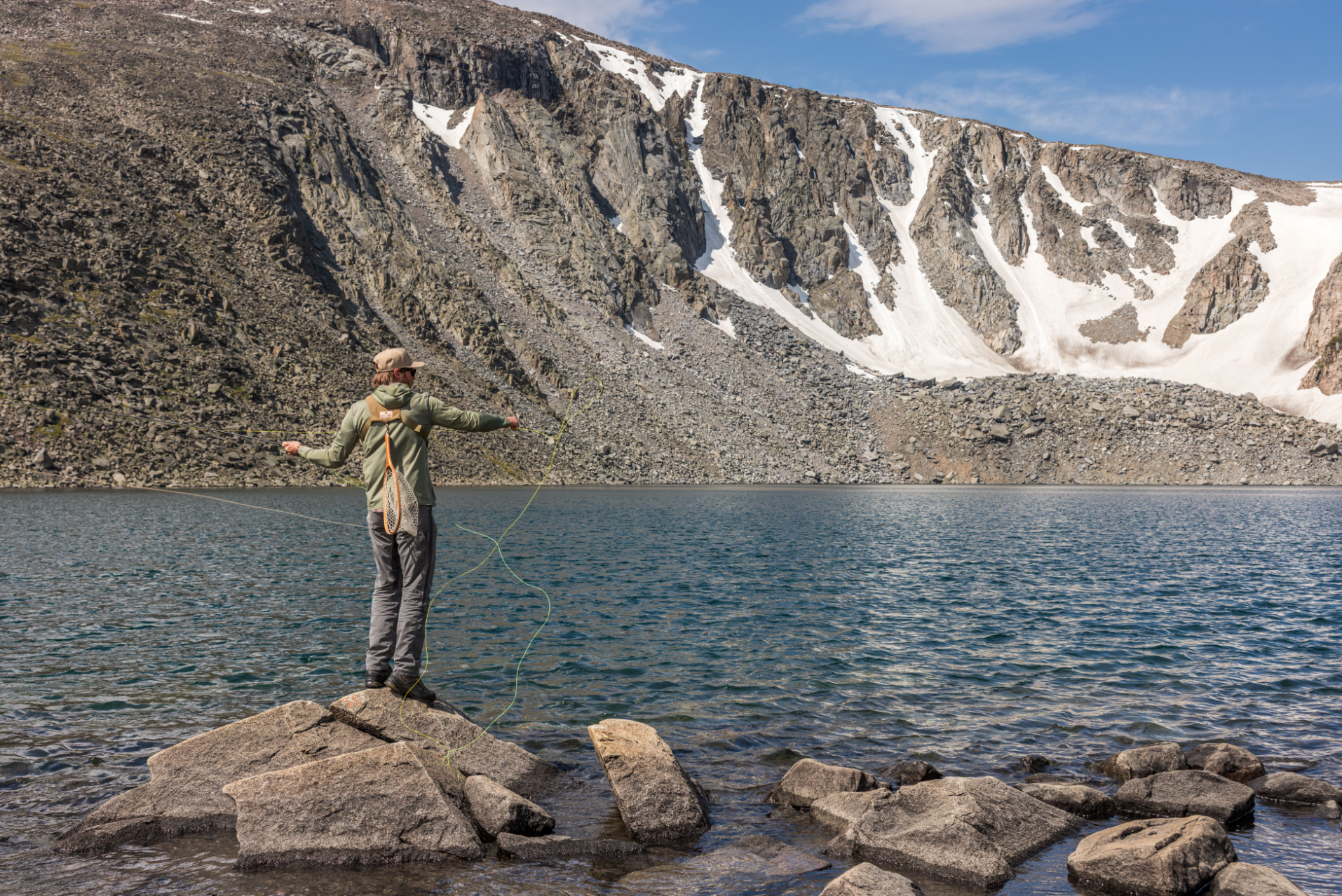
For those of you who have fished the West, you’re likely familiar with chasing trout in high-alpine backcountry lakes. Beginning in the late 1800s, many of these fish were carried into the mountains in milk cans strapped to people’s backs or packed on horses and mules. These days, Cessnas and other aircraft are often used to stock fingerlings from the air.
Every summer and fall, anglers head into these remote places on horseback, on foot, or by whatever set of wheels can handle the terrain. No matter how you get there, alpine trout are usually the end goal.
After more than a decade of guiding fly fishing in the West, I still find myself heading into the mountains in search of cooler weather, fewer people, and some much needed quiet. Some trips leave me questioning my sanity and how far I’m willing to go just to catch a fish. But I think the problems that inevitably come up along the way are part of what keeps drawing me back. This article isn’t a how-to guide. It’s a collection of useful information and hard-earned lessons from hundreds of backcountry trips with clients or alone with my dog.

Flies That Work
When I get to a lake, my go-to rig is a Woolly Bugger with a smaller nymph trailing behind it. The larger fly usually attracts the fish, and if they don’t eat it, they’ll often key in on the nymph. Purple Haze dries are another great option. Most of these fish aren’t too picky, but I still carry a good assortment of sizes and variations of dries, nymphs, and leech patterns.

Necessary Gear
Over the years, my alpine rod has changed in both length and weight. These days, I find myself carrying a 9-foot, 6-weight into the backcountry more often than not. The stiffer backbone helps when presenting flies in the wind, especially if you’re throwing larger dries or leech and baitfish imitations.
This gear list is subjective and based on what has worked for me over the years. Your list will likely look different after a few trips, once you’ve had time to dial in your own backcountry setup.
One of my first backcountry trips was into Rocky Mountain National Park more than two decades ago. I overpacked by at least 30 pounds. If something was unnecessary, chances are it was still packed on my back. After learning the hard way, I now bring only the things I know I’ll use.

One rule I follow is simple: If I pack it, I have to use it during the trip. Carrying an additional eight pounds of camera equipment usually makes it pretty easy to decide whether everything else really needs to come along. A few extra ounces may not seem like much at the trailhead, but they start to feel a lot heavier several miles in.
Having a small pack on your chest or waist is helpful when traveling from lake to lake. I usually leave my main backpack at camp while fishing during the day. A small fly box, extra leader, 3X–5X tippet, nippers, hemostats, dry shake, floatant, indicators, and split shot are about all I carry.
The new Final Rise Chest Rig has been a great option for holding everything. I don’t like to overthink what I bring. I just carry the essentials.

For camping, I like to bring a tarp tent that sets up with trekking poles if I know the mosquitoes won’t be too bad. I pair it with a sleeping pad that has a higher R-value and a Sea to Summit Ember down quilt to stay warm on cooler alpine nights.
A water filter is essential for these trips, and bringing a second compact filter as a backup is never a bad idea. Gravity filters have worked well for me over the years, with a Platypus squeeze filter as my backup.

Nice, but Not Necessary
-
A compact net—great for landing fish safely and keeping them in the water for a quick release.
-
Lightweight backcountry chair—I use the NEMO Moonlite Elite, which weighs just one pound.
Over the years, the gear I carry into the alpine has changed with every trip. Some things have earned a permanent place in my pack, while plenty of others have been left behind after being carried for miles without ever being used. What works for me may not work for everyone, but that’s part of dialing in your own backcountry setup.

Start with the essentials, keep the weight manageable, and adjust your setup after each trip. The trout may be what brings you into the alpine, but the quiet, cooler weather, and time away from everything else are what keep you coming back.
By Dan Towsley