
How to Carry an Injured Dog Out of the Field: 4 Easy Steps in Your Final Rise Vest
It's a feature we hope that you never need to use. But, we know just how important it is to have when your pooch goes down on the mountain. Accidents happen, the best thing that we can do is not fear them, but be prepared for them.
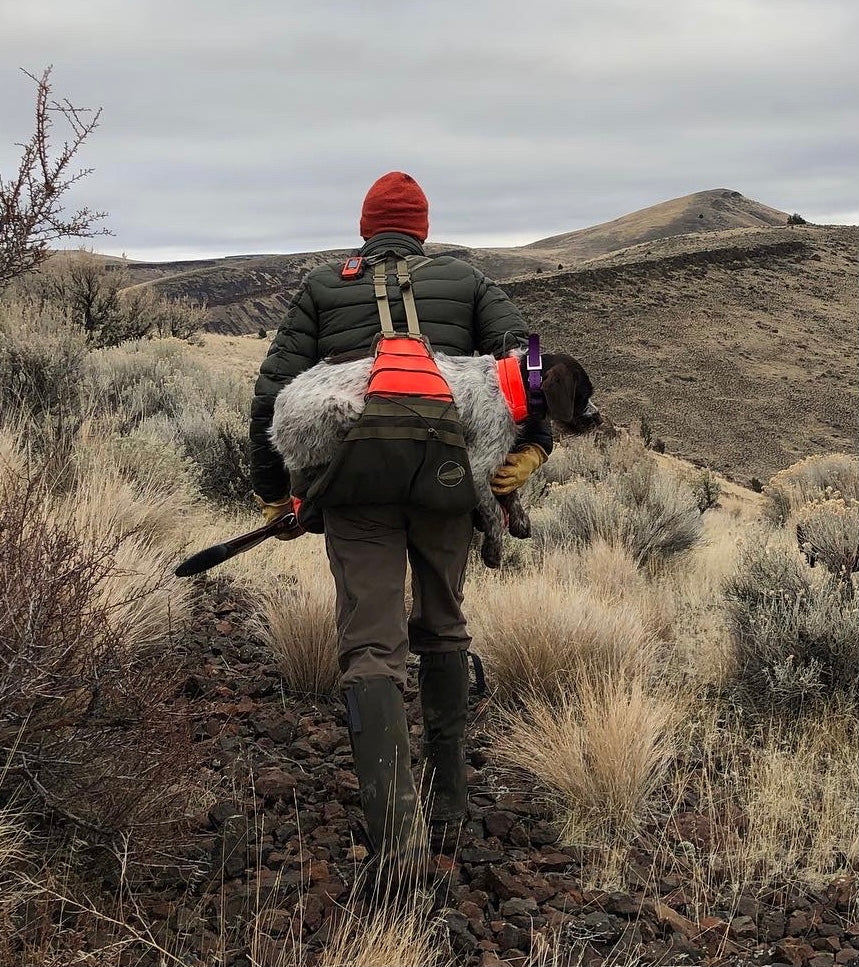
Final Rise is the only Upland Vest manufacturer that has a built in, seamless dog carrying system. We're there for your best days in the field and your worst so that you can make it back to the truck in one piece and make sure that your dog can get back in the field.
Why Can't I Just Carry My Dog?
For starters, if you can carry your 60 lb dog in your arms for 2 or more miles, you're just built better than I am. Pickup your trusty bird dog and carry him around the block and let me know how your arms feel. Add gear, mileage prior to their injury, plus a stressed out dog? Not only are you going to have a bad time, but you're probably going to wish that you had an easier way to carry them.
Your dog is your best buddy and would never intentionally hurt you. But, in a stressful situation, even the best dogs may lash out with the best tool they have- their mouth. It's not uncommon to catch a bite from a confused or injured dog, especially if their mental state has been affected. They're not trying to be nasty, just trying to communicate with you that they're uncomfortable.
So you can absolutely carry your dog, but why not use something that is already baked into the best upland vest on the market?
Training Your Upland Dog to Take a Ride
Just like anything else, dogs will do better in specific situations if you train them ahead of time. Novel situations can be a toss up for how that dog behaves, so add in the additional stress of an injury and it can be a recipe for disaster. Worse yet, you haven't explored the feature yourself and don't know what steps to take when it counts most. We're going to run through how I introduced my American Labrador, Riddy, to being carried in my Summit XT.
Disclaimer: This is not the first time she's been loaded into this vest. Years ago, we did this for the first and only time and have been blessed to avoid any injuries in the field that she couldn't walk off.
Step 1: Understand Your Vest
Your game bag has two "G-Hooks" that connect the back panel of your game bag to the mesh panel that goes along your back. The G-Hooks make it easy to open up your game bag for cleaning or carrying your dog without any complicated straps or lashings. With your game bag on the ground, slide the G-Hooks out of the sewn-in loops as seen.


Step 2: Aligning Your Dog
In my opinion, this is the part that requires the most "training." You can make it as complicated or as simple as you like. You know your dog better than I do. My lab isn't a fan of being picked up, but she also knows when it is necessary. To start, I lead her with some kibble to step over and stop with her torso directly over the opening of the bag.
If your dog is injured or is on the ground, your loading method may differ. In that case, don't move the dog if you don't have to, instead slide the outside panel underneath them and use that to slightly roll them into the main body of the game bag. Coming from my background as an EMT, you should always stabilize your patient before moving them. Time is of the essence.
Once she is in the proper positioning, I will enclose the game bag around her by reattaching the G-Hooks to the game bag. Riddy is a big, deep chested dog weighing in at 80-85 lbs. Looking at her you wouldn't think it, but when you pick her up you can feel the density of a strong duck dog.

Step 3: The Pick Up
Loosen up your shoulder straps and belt more than you think necessary. It will make it a lot easier to get into the vest with the dog already loaded.
You can't just throw this vest over your shoulders with a wounded dog in the back. The risk of dropping the vest, tipping yourself over, or even injuring yourself is too great. If you've ever packed an elk or deer out of the mountains, you'll understand exactly what I mean.
Instead, have the vest seated on the ground with the dog lying down (or in my case, standing up as she wonders what the heck we're doing) and get yourself down as low as you can. I try and keep my feet underneath me so that I can stand with my legs and avoid using my back to lift her.
Once I am in a comfortable position and have the belt around me and the shoulder straps in the proper location, I re-tighten down my belt and shoulder straps as tight as I possibly can go. This isn't like carrying around your shells, water, ammo, etc. We want the belt and the shoulder straps both working as hard as possible so that we can get our dog out.
Because Riddy is so big, I will use both hands to support her chest/neck and her rear end as I pick her up. Even if it is not necessary with your dog's size, a reassuring hand will go a long way to comfort a dog that isn't totally sure of the situation.

Step 4: Enjoy the Ride
At this point, there isn't much to do besides start walking. Keep your feet steady and watch where you're putting them. Your situation is improving the closer you get to transportation, but it won't help you if you rush yourself into a spill and injure yourself or your dog. I wouldn't necessarily say you should go slow, but steady will win that race.
Take your dog on a walk around the block in the vest and see how much more comfortable it is compared to your arm carrying.

Final Thoughts
Having a dog go down in the field with any injury absolutely sucks. Carrying an injured dog out of the field, regardless of how far you need to go, also sucks. It's stressful, exhausting, and if you're not prepared it could be flat out impossible. I've talked to well over a hundred people over the last few years who have had to either carry out their dog in their arms or carried out their dog in one of our upland vests.
What's the common theme? All of them now see the value in having the only vest specifically designed to have a built-in dog carrying system. We all love our dogs and would do anything within our power to keep them healthy, safe, and in the field as long as we can.
