
How to Target Early-Season Sharptail Grouse
There's nothing quite like that first sharptail hunt of the year — dry grass underfoot, a sky that goes on forever, and a dog that's been training all summer to finally get turned loose. But early season also means early-season heat, and that changes almost everything about how we approach a typical bird hunt. Get the heat management and terrain reading right, and the rest of the day takes care of itself.
Keep Your Dog Safe When Temps Are Still Summer-Hot
Early September on the prairie can some of the hottest days of the summer, and heat is the single biggest threat to a good early-season hunt — bigger than missed birds, bigger than tough terrain.
Watch the Temperature-Humidity Math
A solid rule of thumb: if the outdoor temperature plus the humidity percentage adds up to more than 140, it's time to dial things back, especially for a dog that isn't fully conditioned yet.
- Hunt in short pushes and keep an eye on your dog's condition throughout the hunt
- Bring water into the field with you instead of waiting until you're back at the truck
- Use the skin-pinch test near the shoulders - slow return to place is an early sign of dehydration
- Steer clear of stagnant ponds that can carry blue-green algae, especially late in a dry summer
- Watch for excessive panting, drooling, or a glassy, confused look - that's your cue to stop, not push on
This is exactly why we built our vests with hydration up front instead of an afterthought. Our Summit XT carries two 32 oz bottles with easy access on the belt, plus two more bottles in the game bag and a water bladder to back it up, so you've got enough water to meter out across the morning without ever hiking back to the truck. If you're rebuilding your kit before the season, it's worth a look.

Learn Where Birds Hang Out as the Day Heats Up
Early-season sharptails run on a schedule, and that schedule is dictated almost entirely by heat and food. Once you learn to read it, you'll stop wasting boot leather on empty ground.
Morning and Evening: Follow the Grasshoppers
In the cool hours right after sunup and again late in the afternoon, birds push into forb-rich edges to feed heavily on grasshoppers — a high-protein food source they'll work until the first hard frost shuts it down.
- Focus on ragweed and alfalfa edges bordering grassland prairie
- Field margins next to cropland tend to hold a LOT of bugs - perfect for birds
- The following windows are a great timeline to catch birds out in the open and moving
Midday: Follow the Shade
Once temperatures really start to climb, birds go from feeding to hiding. They'll tuck into anything that breaks the sun.
- Juniper and pine shelter belts
- Snowberry thickets (my personal favorite)
- Scattered shade trees in otherwise open country
- Standing sunflower or corn where cropland borders CRP ground
One early-season perk worth remembering: birds are usually still in singles, pairs, or small family groups this time of year rather than the big late-season packs of 10-30 birds. Smaller groups sit tighter and are far easier for a dog to pin down within range.

Scout the Country Before You Ever Load a Gun
Knowing what sharptails do during the day is only useful once you've found the ground where they're actually doing it. Scouting isn't optional busywork — it's the difference between hunting birds and hunting hope.
Do Your Homework from the Couch
Before you ever burn gas, put a mapping app to work. Satellite imagery and crop-data layers make it easy to find the exact edges sharptails key on without driving a mile of section-line road first.
- Look for transition zones where grain fields butt up against grassland or CRP — that boundary is prime real estate
- Use crop-type data to spot wheat, oat, or corn stubble bordering native cover
- Drop waypoints on anything that looks "birdy" so you're building a map you can come back to year after year
- Download your maps for offline use — a lot of the best sharptail country has zero cell service
Verify It in Person
E-scouting narrows the search, but nothing replaces windshield time and a pair of binoculars.
- Look for water — field ditches, brushy draws, old stream corridors, and prairie potholes — especially in a dry year when it's scarce
- Confirm there's low, brushy loafing cover in the 4-8 inch range nearby, not just open grass
- Knock on doors and ask permission early; landowners can tell you more about where birds have been sitting than any map layer will

Don't Forget Why We're Out Here
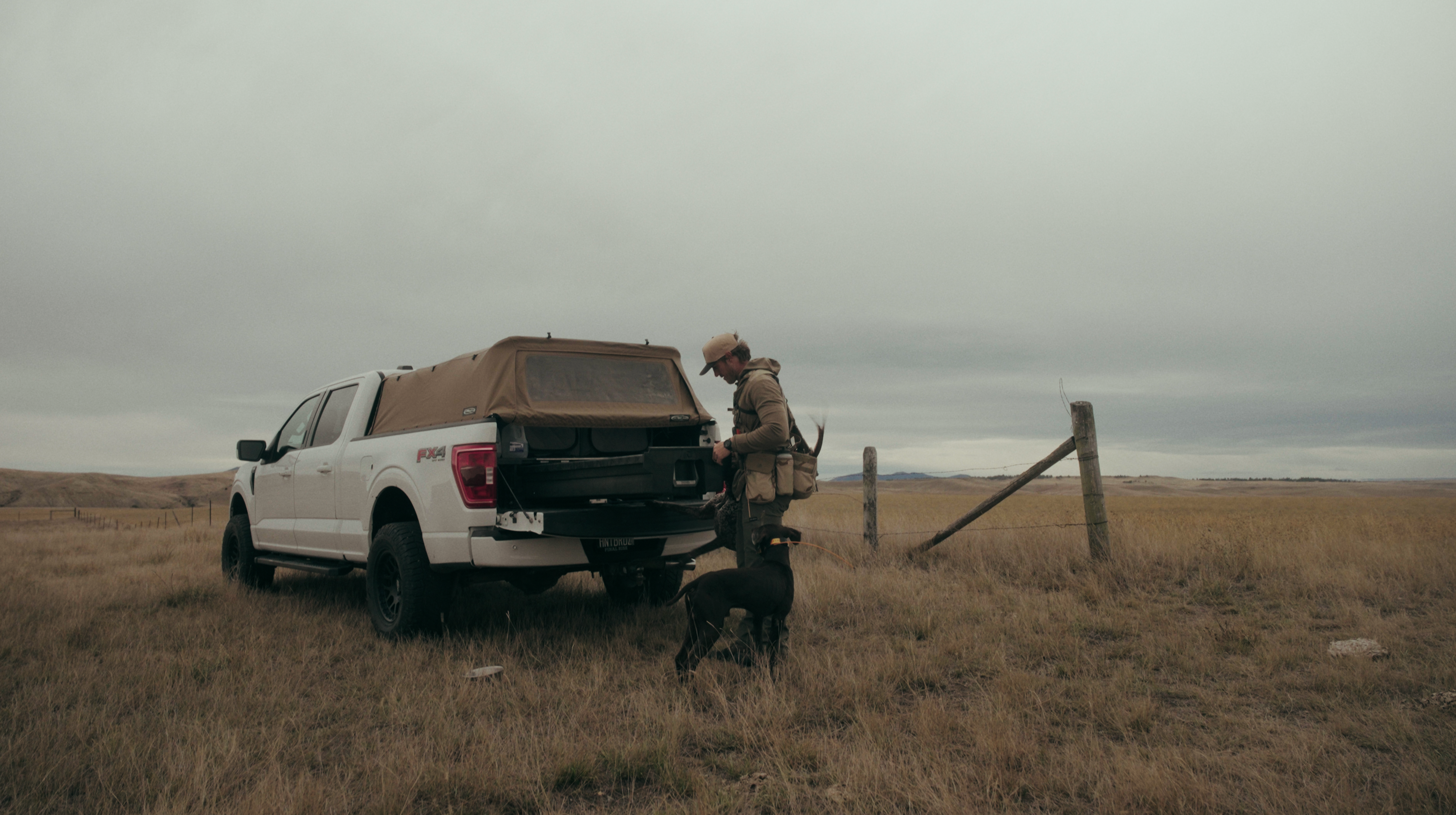
All the heat management and terrain-reading in the world doesn't change the best part of early season — it's simply one of the most beautiful times to be out on the prairie. The grass is gold, the sky is enormous, and there's no crowd to compete with for a piece of open ground.
Take the time to explore new country you haven't hunted before. Let a young dog make mistakes on singles instead of getting overwhelmed by a big covey. Slow down between water breaks and actually look around. The birds will still be there in October, but this particular version of the prairie — wide open, golden, and quiet — only shows up for a few weeks a year.
Hydrate smart, read the cover, and get out there while it's this good.
Sources: