
Terrestrial Fly Fishing: How to Fish the Hopper Hatch on Small Streams and Creeks
Don't Miss Epic Summer Dry Fly Fishing with Hoppers, Beetles, and Ants
By Josh Tatman

Summer is terrestrial season, and for many anglers it delivers the most exciting dry fly fishing of the year. While trout continue feeding on aquatic insects like PMDs and Tricos, they also begin keying heavily on land-based insects that accidentally fall into the water.
For anglers who love explosive surface takes, terrestrial fly fishing offers some of the best opportunities of the season. Whether you're targeting trout on a small mountain stream, meadow creek, or larger river system, fishing hoppers, beetles, ants, and cicadas can produce aggressive eats throughout the summer.
If you're new to fly fishing, learning how to fish terrestrials is one of the fastest ways to experience consistent dry fly action.
What Is Terrestrial Fly Fishing?
Terrestrial fly fishing refers to using fly patterns that imitate insects living on land rather than in the water.
Common terrestrial insects include:
- Grasshoppers
- Beetles
- Ants
- Cicadas
- Crickets
Unlike aquatic hatches that occur during specific windows, terrestrials are available throughout much of the summer. Wind, livestock activity, wildlife movement, and simple bad luck push these insects into the water where trout eagerly feed on them.
As summer progresses and aquatic hatches become less predictable, terrestrials often become a primary food source for trout.
When Is the Best Time to Fish the Hopper Hatch?
One of the biggest mistakes anglers make when fishing terrestrials is assuming trout will eat large foam flies all day long.
On most trout streams, the best terrestrial fishing occurs during:
Mid-Morning
Early mornings can be slow. As temperatures rise and insects become active, trout often begin feeding aggressively on surface insects.
Evening
The last few hours of daylight can be exceptional. Long shadows reduce trout visibility and increase feeding activity.
Overcast Days
Cloud cover often extends feeding windows and allows trout to stay comfortable in shallow water longer.
Windy Conditions
Many experienced anglers actively seek windy days when fishing hoppers. Wind knocks natural insects into the water and can trigger nonstop feeding activity.
Best Water Types for Terrestrial Fly Fishing

When fishing terrestrials on small water, location matters more than fly selection.
Focus on:
Transition Water
The water between fast riffles and slow pools often produces the most consistent action.
Cut Banks
Undercut banks create security cover and naturally collect drifting terrestrials.
Shaded Banks
During summer heat, trout frequently position themselves in shaded water where temperatures remain cooler.
Dark Seams
Deep seams and current edges allow trout to hold comfortably while waiting for food to drift overhead.
Avoid spending too much time in slow, glassy pools where trout have ample time to inspect your fly.
The Best Fly Rod Setup for Small Stream Terrestrial Fishing
One of the advantages of fishing terrestrials is that you don't need complicated gear.
For most small streams and meadow creeks:
- 7'6" 3-weight fly rod
- 8'6" 4-weight fly rod
- Weight-forward floating fly line
- 3X or 4X tippet
- Short leader setup
A shorter rod often improves casting accuracy around brush, undercut banks, and tight streamside vegetation.
Many anglers automatically reach for a 5-weight, but lightweight rods can easily cast foam hoppers and large terrestrial patterns.
Best Terrestrial Fly Patterns for Trout

Every angler has a favorite terrestrial pattern, but several flies consistently produce across the West.
Large Terrestrial Patterns
- Morrish Hopper (Size 6–10)
- Chernobyl Ant
- Doofus Cicada
These flies excel when trout are aggressively feeding on larger insects.
Medium Terrestrial Patterns
- Hippie Stomper (Size 10–12)
- Rainy's Hi-Viz Hopper
- Bionic Ant
These patterns often save the day when trout refuse larger offerings.
Traditional Terrestrials
- Elk Hair Beetle
- Schroeder's Parachute Hopper
Although less buoyant than foam flies, traditional patterns can be deadly on selective fish.
Hopper-Dropper Fishing: Should You Add a Nymph?
A hopper-dropper rig combines a terrestrial dry fly with a nymph suspended underneath.
This setup can be highly effective when trout are feeding below the surface but still willing to investigate a hopper.
Benefits include:
- More fish opportunities
- Better coverage of the water column
- Increased effectiveness during slower surface feeding periods
The downside is increased tangles and more frequent snags along grassy banks and brushy stream corridors.
For pure surface action, many anglers prefer fishing a single terrestrial pattern.
How to Present a Hopper Fly
One of the most overlooked aspects of hopper fishing is presentation.
Unlike mayfly fishing, a perfect drag-free drift is not always necessary.
In fact, many successful anglers intentionally allow their fly to:
- Land with a noticeable splash
- Twitch occasionally
- Drift naturally along cut banks
Natural grasshoppers rarely land gently.
A loud "plop" often gets the attention of opportunistic trout.
If a fish is willing to eat, it will usually do so within the first few casts. Make quality presentations, then continue moving upstream.
Protect Trout During Summer Fly Fishing
Warm water conditions can stress trout significantly.
As water temperatures climb:
- Fish early and late
- Fight fish quickly
- Keep fish submerged during release
- Skip fishing entirely when temperatures become unsafe
Responsible anglers help ensure healthy fisheries and strong trout populations for future seasons.
Minimalist Gear for Small Water Fly Fishing
One of the best parts of terrestrial season is how little gear you actually need.
A compact setup keeps you mobile and allows you to cover more water efficiently.
The Final Rise Chest Rig carries the essentials:
- Fly box
- Tippet
- Net
- Water bottle
- Snacks
Pair it with the Final Rise Sonora Sun Hoody for protection during long summer days on the water.
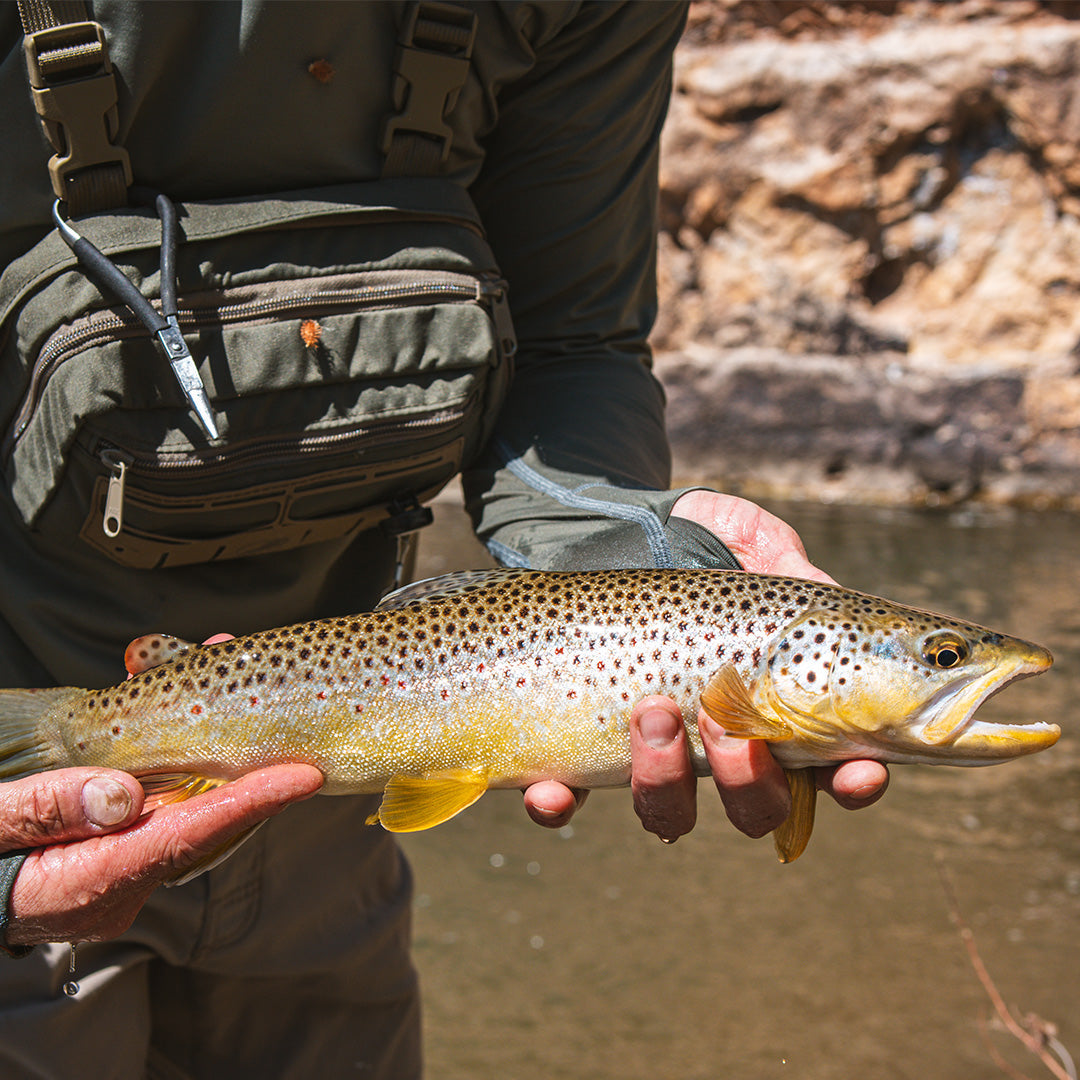
When a big brown trout explodes on a hopper tucked against a grassy cut bank, you'll appreciate traveling light.