
34 Hours: Edda's Story
Edda
What started as a fun, three week adventure guiding Chukar hunts in Hells Canyon turned into a brutal 34 hour search and rescue operation that I never saw coming.
Edda is my seven year old Deutsch Drahthaar. Throughout her life, she has spent countless hours hunting and training alongside me. She has traveled from the Arctic tundra of Alaska to the deserts of the Southwest. Along the way, she has pointed and retrieved 16 species of upland birds, accounted for more than a few furry critters, and helped hunters young and old recover big game animals they thought they would never see again.
She has earned a Prize I VGP through the Jagdgebrauchshundverband (JGHV) and the title of Versatile Champion through NAVHDA. Edda has truly lived up to her nickname: The Queen.

Last year, Edda inhaled a grass awn, an invasive seed that became the source of a nasty infection involving the bacteria Nocardia. Her lungs collapsed, and she was riddled with infection. She was knocking on Hell’s gate, but through a combination of heavy antibiotics and what I can only describe as a miracle, we saved her.
At least for a little while.
Edda went on to have a great 2025 hunting season. She was back to 100% and led my string of dogs through one of the best seasons of my career. However, come springtime, the infection caught back up with her, this time affecting her brain.
You see, grass awns can migrate through the body, sometimes remaining dormant for months or even years before causing another problem. They are incredibly difficult to remove. Unless one becomes localized within an abscess, finding and removing it can be nearly impossible. Even then, these seeds are so tiny that completely eliminating them from the body can be extremely difficult.

This latest development has affected Edda’s directional hearing, balance, and depth perception. Although we have been treating her, the infection created a mass on her brain. It is in a difficult location, and it likely already caused irreversible damage to her nervous system. No surgeon will touch the mass and she is fighting it solely with medication.
With that background, I hope to shed a little light on Edda and explain how her condition contributed to an experience that nearly cost me my dog in Hells Canyon.
The Fall
After two excellent days of guiding with Tyler Nash of Whitepine Outfitters, I was looking forward to a couple of days off to selfishly swing my .410 over a few coveys of Chukar. I had two young granddaughters of Edda who needed some reps, so we headed out.
We started the day with a few bird contacts and a few birds down. All in all, a great day for the young dogs.
When I let Edda out for a short potty break, I realized that she had never actually gotten a Hells Canyon Chukar herself. Knowing she wasn’t in hunting shape, my plan was to let her daughter, Agatha, do the hunting and locating. If I knocked a bird down, I’d let Edda handle the retrieve.
It happened twice as we walked a relatively simple two track road surrounded by the unforgiving terrain of the Salmon River breaks. Steep, rocky hillsides and massive bluffs dropped thousands of feet toward the river below.

Even for a healthy, experienced dog, this country poses a tremendous threat. One wrong step can send a dog tumbling down a hillside or over a cliff, almost certainly resulting in death. In my opinion, a dog that isn’t steady to wing, shot, and fall faces a significant risk in this kind of country. I held Edda back, close to my side.
We finished our walk, took a few photos, and turned around to head back when Agatha slammed on point behind us, overlooking the basin we had just been admiring.
Edda perked up and honored her daughter behind me.
I shot. Agatha stood firm.
My line of sight was obscured by some shrubs, so I stepped forward to get a better look over the edge before sending Agatha for the retrieve. As I did, Edda came forward, lost her footing, and rolled down the draw nearly 200 feet to the bottom.
I was worried, but she jumped up, shook herself off, and immediately started searching for a downed bird. Seeing her on her feet and working, I let her continue.
Light was fading fast, and I wasn’t even sure I had hit my target, so I began calling Edda back. That’s when I realized something was wrong.
Despite being only about 250 yards away, she had lost her bearings. Then her garmin GPS collar disconnected.
I watched as she began moving downhill in a panic, trying to figure out where I was.
I put Agatha in a down and scrambled down a steep ridge, hoping to cut Edda off before she got herself into more trouble. When I finally reached the area where I thought she would emerge, she was nowhere to be seen. All I could see was a massive cliff where she had disappeared.
I knew that trying to navigate to the bottom without proper lighting could leave me injured as well. So I waited. For two hours, Agatha and I called and listened. Nothing.
We eventually ran to the truck, drove back, and spent another two hours calling for her.
Finally, I had to make the toughest decision of the night. With it being pitch black and no safe way to continue searching, we headed back to camp, leaving a sick and potentially injured Edda to face the mighty Hells Canyon alone for the night.
I made a post on social media, hoping someone on the river might have seen her or, by some chance, picked her up.
Running Out of Options
Morning came slowly.
We headed back toward the bottom of the cliff, preparing ourselves for the worst. Two friends were on their way to help search on foot and bring a long range houndsman antenna in hopes of restoring communication with Edda’s collar.
After driving around with the antenna for nearly an hour without any luck, I began to accept that her collar had either died or was malfunctioning severely.
My two friends and I split up to scout the basin. We hiked draw after draw, some of them twice, all the way down to the river. We searched everywhere we could get to on foot, but there was no sign of Edda.
As we left the basin, I felt like I was running out of options and time.
I checked my phone, hoping that the post from that morning had generated some good news. What I found was a social media post that had absolutely exploded. Thousands of likes, shares, and comments were pouring in. People were offering prayers, encouragement, and support for Edda. The hunting community was coming together in force.

People offered suggestions and ideas to help. Some had even tracked down my Venmo and started donating toward the search and rescue effort.
One of the most popular suggestions was to bring in a thermal drone.
To be honest, I didn’t have much hope. I figured Edda would be cold by then and that a drone wouldn’t be able to pick her up. But something told me I had to try.
I reached out to multiple drone pilots. None were willing or able to make the trip, except Austin Pitts with Specialty Drone Service out of Cheney, Washington.
Austin told me he would load up that very minute and get on the road.
He drove six hours to meet me at midnight.
The Queen Is Found
Austin arrived, and we drove straight to the spot where I had last seen Edda roll down the draw.
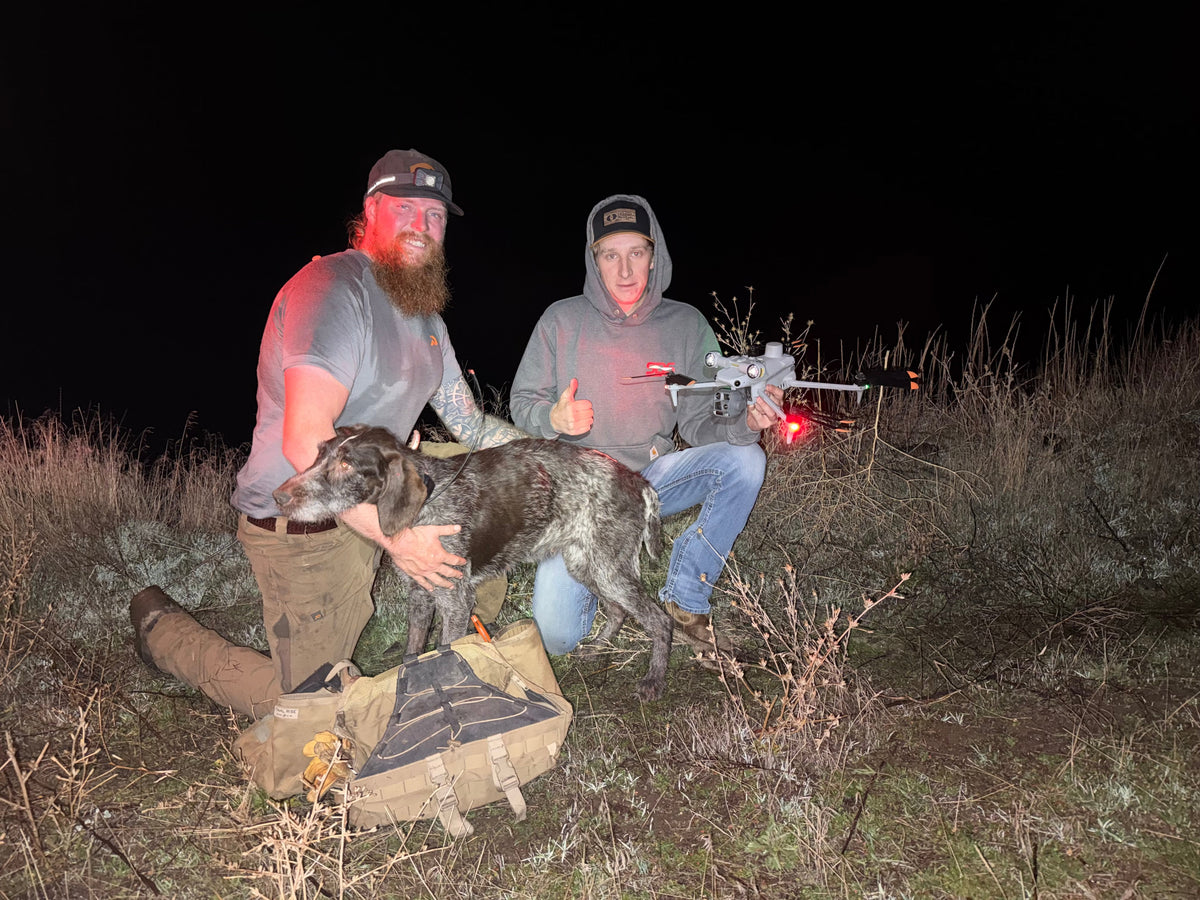
Within 10 minutes, he had the drone in the air.
Watching him operate that thing was like watching something out of a video game. He could scan for heat signatures, investigate potential hotspots, and zoom in like a magnifying glass to get a closer look.
After only about 15 minutes in the air, he focused on a hotspot. He zoomed in and switched on the spotlight.
There she was.
Alive.

She wasn’t more than 400 yards from where I had lost sight of her, but she was in the nastiest section of terrain the area had to offer. She was stranded on an outcropping surrounded by cliffs hundreds of feet high on all sides. There was a small opening that a person could clamber through to reach her, but first I had to navigate the cliffs in the dark.
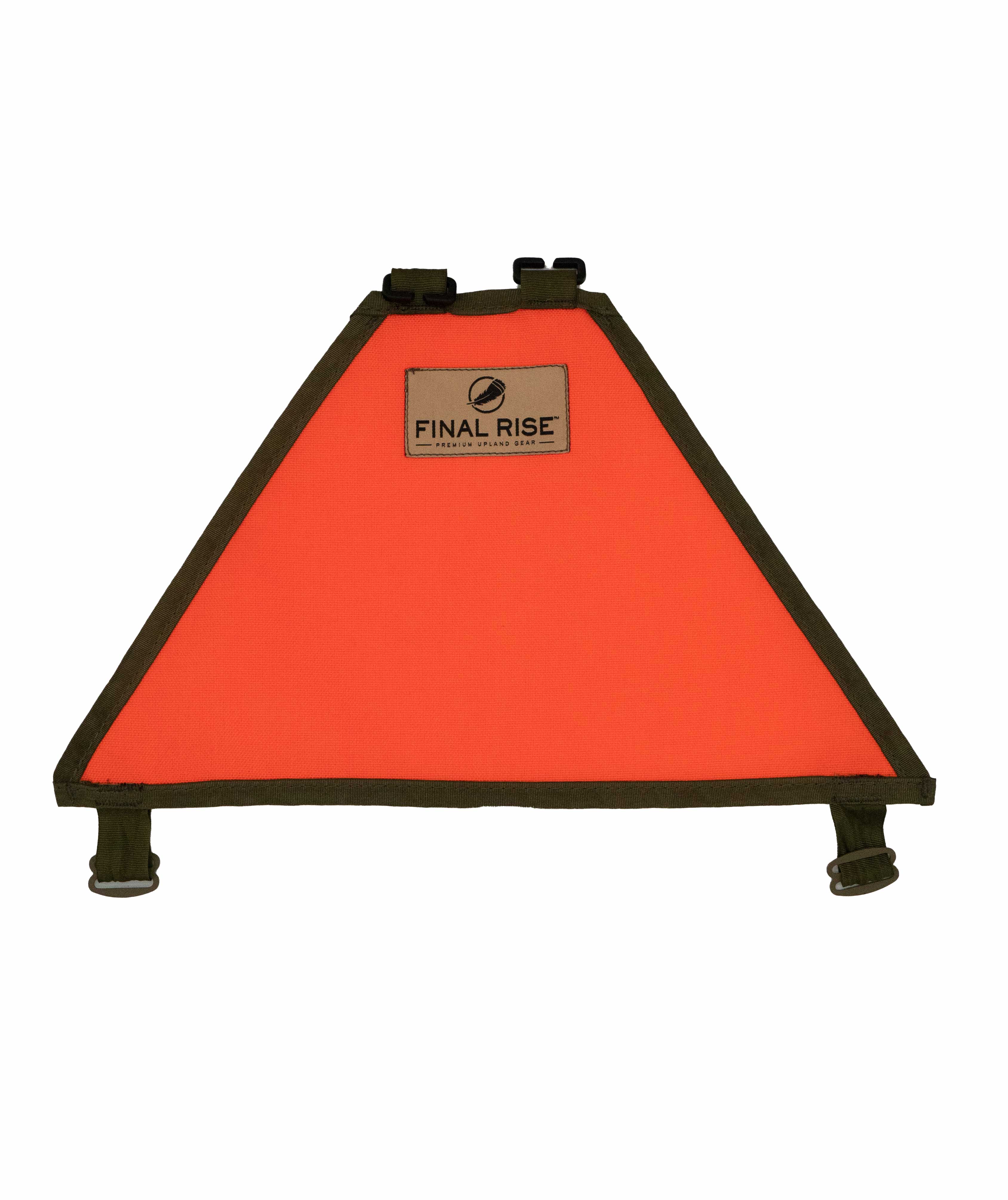
I laced up my boots and put on my Final Rise vest so I could pack her out hands free.
I leaned heavily on the experience I had gained navigating mountain terrain throughout my years in Alaska. Using nothing but my iPhone flashlight and a dying headlamp, I scrambled down steep rock walls and through narrow draws to reach the climb that would get me to her.
Without that confidence and experience navigating sketchy terrain, I don’t think I could have reached her until daylight, if at all, without serious climbing gear.
After about 30 minutes of navigating the descent, I reached the base of the outcropping. From there, I still had to climb several smaller cliffs to get into her little fortress.
As I approached, I called out her name.
In the fading light of my headlamp, I saw her head pop up.
She struggled to sit as she greeted me, but managed to give me the happiest tail wag.
There she was. The Queen in all her glory..
I snapped a quick photo, and under the spotlight of the drone, loaded her into my Final Rise vest so we could begin the climb out.
Rather than retracing the route I had taken down, I decided it would be safer to take the long way around. It was still steep, but considerably less treacherous.
It took me about an hour to get her back up to the road, where Austin was waiting.
We loaded her into the truck and headed back to camp.

The Fight Continues
During those 34 hours, Edda had lost weight and become severely dehydrated. I immediately administered a liter of subcutaneous fluids and resumed her antibiotics.
The camp cook, Josh, had prepared some heavy Chukar stock, which she lapped up graciously. I continued feeding her that until I could get into town and find some canned food.
I reached out to several trusted friends, including veterinarians, to discuss medications that might help her through this ordeal. We decided to use steroids as well, which I believe played a major role in saving her life that first night.
Since then, she has made progress. She’s eating more solid food again, and I’m working on putting some weight back on her while continuing to fight the underlying infection that started this entire mess.
Edda is the Queen, and she isn’t going to give up her crown so easily.
We’ll continue fighting her illness for as long as there’s a fight to be had.
Lessons From Hells Canyon
For those of you who hunt your dogs in the kind of country I do, there are a few things I’d like you to take away from this experience.
1. Build confidence in your own abilities.
Develop your physical fitness and your ability to navigate difficult terrain. There may not be anyone around to help when you need to make a decision or take action. Sometimes you’re the only person who can get the job done.
2. Maintain quality gear.
Boots, vests capable of safely carrying a dog, and reliable, fully charged lights can make or break an emergency situation. Don’t overlook the equipment you may need when things go wrong.
3. Lean on your community.
We do this for the dogs, but the people who come along with it are some of the best folks out there. They will do just about anything they can to help, whether they’re right down the road or hundreds of miles away. You just have to reach out.
4. Become Vet savvy.
Find a veterinarian who is willing to work with you and educate you. I have a handful of veterinarians I trust who have taught me an incredible amount. From understanding medications and recognizing emergencies to learning how to handle certain situations in the field, having a good veterinarian in your corner can save your dog’s life.
5. Most importantly, never give up.
Edda would have killed herself trying to find me. In fact, that’s exactly what she was trying to do. I would do the same for her.
Our dogs do more for us than we could ever repay. They’re also a whole lot tougher than we give them credit for. Remember that when you’re at your wit’s end.
Ultimately, Edda may not have a long life ahead of her. But because of her strength and the incredible hunting community that rallied around us, we have another shot at it.
I cannot adequately express how grateful I am for everyone who shared the post, offered advice, donated, made phone calls, or simply kept us in their thoughts. From Austin making that six-hour drive in the middle of the night, Mike and Chad for hiking endless Draws, to Whitepine Outfitters and everyone who helped spread the word, you all played a part in bringing my girl home.
Thank you.
- Elijah Barbour
All Hail the Queen.
