
12 Gauge vs. 20 Gauge for Upland Birds: Which Should You Actually Carry?
Walk into any bird camp the night before an opener and you'll hear the same argument. One guy swears a 12 gauge is the only honest choice for wild roosters. The guy across the table has been killing pheasants with a 20 gauge for fifteen years and doesn't understand what the fuss is about. Both of them are right, and that's actually the interesting part.
The 12 gauge vs. 20 gauge debate used to have a solid answer. Today it mostly doesn't, but the reason why says a lot about how far shotshell technology than which gauge is "better"

What the Argument Was Actually About
The traditional case for the 12 gauge came down to payload. More shot in the shell means a denser pattern, and a denser pattern means more pellets on a bird at forty yards. When you're hunting late-season pheasants that flush wild at the edge of range, or chukar that break downhill and are gone in three seconds, that margin matters.
The case for the 20 gauge was just about everything else. A 20 gauge upland shotgun is significantly lighter than a 12 gauge, and we all know pounds equals pain when you're hoofing it around all day. Carry that across eight miles of chukar hills and you'll feel it by the truck. Lighter guns come up faster on close flushes, and lighter recoil means you're not flinching at your best shot opportunity all morning.
So the old rule went: 12 gauge for pheasants, 20 gauge for quail and woodcock. Big bird, big gun. For a long stretch, that was mostly correct.
What Changed?
Ammunition did.
Modern shotshells are not the shells your grandfather carried. Wad design has improved dramatically so that today's wads protect the shot column through the forcing cone and bore, so fewer pellets get deformed on the way out. Deformed pellets are what blow patterns apart downrange, and cutting that loss means more of your payload actually arrives where you're pointing.
Buffering compounds and copper- or nickel-plated shot push the same direction. Both keep pellets rounder under setback forces, which tightens patterns and extends effective range without adding a single pellet to the hull. A well-built 20 gauge load today patterns like a mediocre 12 gauge load did a generation ago.
Then there's shot material. Bismuth is meaningfully denser than steel and gentler on older barrels, and tungsten super shot (TSS) is denser still. Dense enough that hunters can drop two or three shot sizes and retain downrange energy. When your pellets carry more energy individually, raw pellet count stops being the most important number. A 20 gauge shell loaded with dense, high-quality shot can do work that used to require a 12 gauge hull to accomplish.
Add in 3-inch 20 gauge offerings carrying payloads once reserved for 12 gauge hulls, and the performance gap narrows to something most of us can't shoot well enough to notice anyways.

Which Means It's Your Call
Here's the honest conclusion: at realistic upland distances - most birds die inside thirty-five yards, so a well-patterned 20 gauge and a well-patterned 12 gauge kill birds the same way. What separates them now is fit, feel, and how you hunt.
Pick the gun you shoot best. If a lighter 20 gauge means you carry it comfortably on mile nine and swing it smoothly on a surprise flush, that's a real advantage that shows up in your game bag. If the 12 gauge fits your frame better and you shoot it with more confidence, carry it. Confidence will keep you on track regardless of which is ballistically superior.
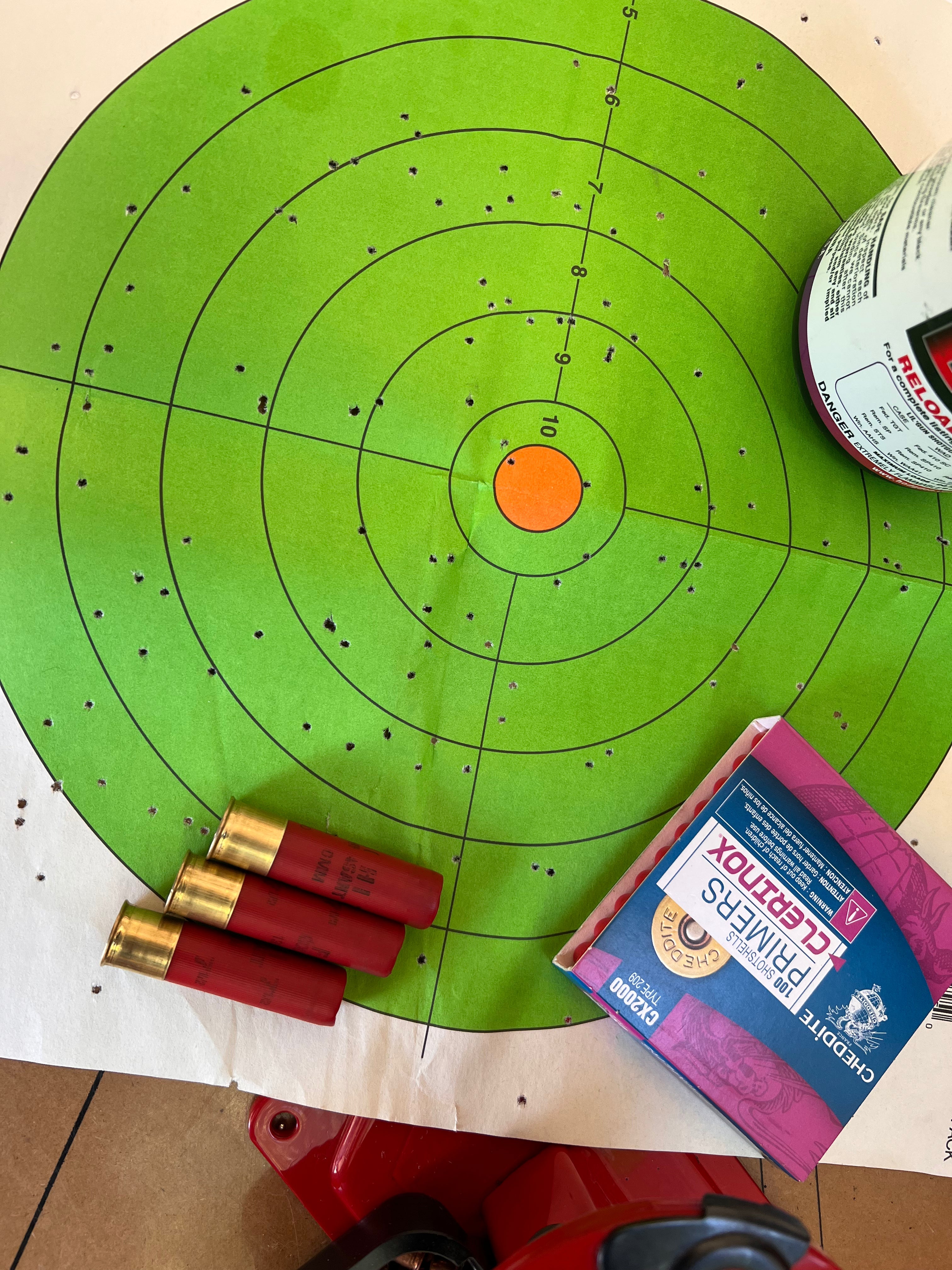
What matters more than gauge is pattern work. Shoot your actual load through your actual choke at your actual expected range, count pellets, and adjust. A 12 gauge with the wrong choke and a bargain load will lose to a 20 gauge that's been properly patterned every single time.
The Practical Wrinkle: Carrying Two Loads
Most upland hunters end up running more than one load anyway, so a lighter shot size for early-season birds holding tight, something heavier for the long flushes later in the day. The problem is keeping them separated when you need them. Digging through a vest pocket while a dog locks up is how you end up shooting the wrong shell.
That's the argument for dedicated shell storage. Our Modular Shell Holder keeps four shells ready on 1-inch webbing, mounted wherever you want them on an XT Vest — ideal for staging your heavy load separate from what's already in the gun. For a lower-profile option, the Shell Holder wraps onto the 2-inch waist belt and keeps two shells tight to your core, right where your hand already goes on a covey flush. Both fit 12 through 28 gauge, which is convenient if you're one of those hunters who still hasn't settled the argument and switches guns depending on the day.


Because plenty of us don't settle it. And with ammunition this good, there's no longer much reason to.